Open Nav

High frequency printed circuit boards power the most performance-critical electronics of the 21st century: 5G base stations, Automotive Radar systems, Satellite Communications modules, aerospace guidance systems, and mmWave consumer devices. Unlike standard digital PCBs, where minor variations in manufacturing may only affect production yield, even small deviations in high frequency board fabrication can cause catastrophic performance failures: increased Insertion Loss, impedance mismatches, signal distortion, or complete failure of the RF link.
Choosing a high frequency PCB manufacturer is therefore far more consequential than choosing a standard PCB shop. A manufacturer that cuts corners on material sourcing, etch control, or impedance testing will produce boards that look perfect on visual inspection but fail RF performance testing at final assembly, costing weeks of rework and thousands of dollars in wasted components and testing time. This article provides a structured, engineering-focused framework for evaluating high frequency PCB manufacturers, covering the core capabilities that separate reliable suppliers from those that will cause costly problems downstream.
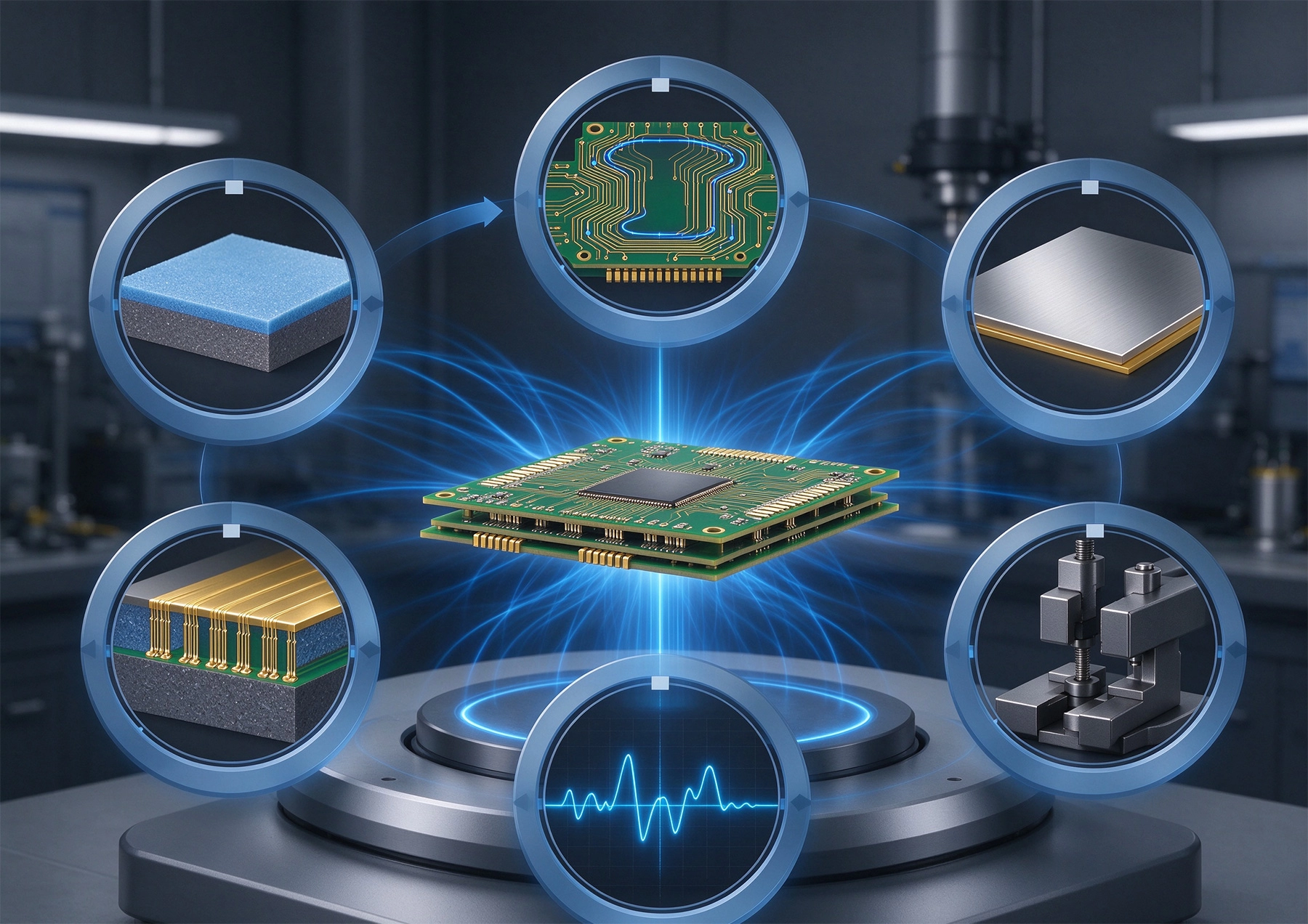
high frequency pcb manufacturing is not simply standard Pcb Manufacturing with a different material. The entire process flow requires tighter tolerances, specialized equipment, and quality controls that are unnecessary for low-speed digital designs. At frequencies above 1 GHz, and especially above 10 GHz, the physical characteristics of the board become part of the circuit itself. Trace width variations of just 10 μm, dielectric thickness variations of 5 μm, or minor misregistration between layers can shift the Characteristic Impedance of a Controlled Impedance trace outside its tolerance band, leading to signal reflections that degrade link performance.
Standard PCB manufacturers who dabble in high frequency work often underestimate these effects. They may be able to produce a board that passes electrical continuity testing, but it will fail RF performance testing because they lack the process controls to hold the tight tolerances required for consistent high frequency performance. Evaluating a high frequency manufacturer requires looking past surface-level factors like price and stated capability, and digging into the specific process controls, testing capabilities, and material practices that directly affect RF performance.
The material is the foundation of high frequency pcb performance. High frequency substrates from brands like Rogers, Taconic, Arlon, and Panasonic Megtron have tightly controlled Dielectric Constant (Dk) and loss tangent (Df) values that are critical to predictable RF performance. Using counterfeit, out-of-spec, or improperly stored material is the single most common cause of unexpected high frequency performance failure.
The first thing to verify with any prospective high frequency manufacturer is their authorized distributor status for the specific material you plan to use. Reputable high frequency manufacturers will have official distribution agreements with material suppliers, and they will provide traceability documentation for every batch of material used in production. This traceability includes the material lot number, date code, and supplier certificate of analysis (CoA) that verifies the Dk and Df values meet the datasheet specifications for that lot.
Material storage conditions are equally important. High frequency Ptfe-based and ceramic-filled substrates are hygroscopic: they absorb moisture from the air, which increases their Dk and Df values and degrades RF performance. A qualified manufacturer will store High Frequency Materials in temperature and humidity controlled storage cabinets, with strict shelf life controls and dry-bake procedures before lamination to remove any absorbed moisture. Manufacturers who store High Frequency Materials on open shelves alongside standard Fr-4 should be avoided immediately — the moisture they absorb will produce inconsistent performance from board to board.
Be wary of manufacturers who offer "equivalent" or "generic" high frequency materials without clear datasheet specifications. While some off-brand materials may meet basic Dk/Df requirements, they often have less consistent properties across production lots, higher temperature coefficient of Dk, and poorer long-term reliability under thermal cycling. If material cost is a concern, work with the manufacturer to identify a qualified alternative material with published performance data, rather than accepting an unproven generic substitute.
High frequency designs require far tighter process tolerances than standard digital boards. The following process capabilities are non-negotiable for reliable high frequency production:
The Characteristic Impedance of a high frequency trace depends directly on its width, so etch tolerance is critical. For 50-ohm traces on a 0.127 mm dielectric, a width variation of just 0.01 mm changes the impedance by approximately 1 ohm, which is enough to push a ±10% tolerance impedance trace out of spec. A qualified high frequency manufacturer will maintain etch tolerance of ±0.005 mm or better for fine traces, with in-line etch monitoring systems that adjust process parameters in real time to compensate for variations in copper thickness and laminate reactivity.
Etch uniformity across the panel is also important. If traces on the edge of the panel are etched wider than traces in the center, boards from the same panel will have inconsistent impedance values. Ask the manufacturer for their etch uniformity data across production panels — a value of less than 5% variation across the entire panel area is acceptable for most high frequency applications.
High frequency designs often use stripline routing, where the signal trace is embedded between two ground planes for Shielding. The position of the trace relative to those planes affects the impedance, and misregistration between layers shifts the impedance and degrades signal isolation between adjacent traces. A qualified manufacturer will maintain layer-to-layer registration accuracy of ±0.025 mm or better for high frequency designs, with automated optical alignment systems for each lamination cycle.
Impedance Control is the single most critical process parameter for high frequency designs. A manufacturer claiming Impedance Control capability must be able to provide historical data showing their yield for impedance-controlled boards at your required tolerance. For most high frequency applications, ±10% impedance tolerance is the minimum acceptable level; for high-performance mmWave designs, ±5% tolerance is often required. Ask for impedance test reports from recent builds similar to your design, including the Tdr (Time Domain Reflectometry) plots to verify the measurement method and consistency.
Note that impedance control capability depends on the stackup and material. A manufacturer that can hold ±10% tolerance on Fr-4 may not be able to hold the same tolerance on a Ptfe-based high frequency material, which has different etching and lamination characteristics. Always verify their capability for your specific material and stackup, not just general impedance control capability.
Vias introduce impedance discontinuities in high frequency signal paths, so their formation must be tightly controlled. For vias that pass through multiple layers, backdrilling removes the unused stub portion of the via barrel, which reduces signal reflections and Insertion Loss at high frequencies. A qualified high frequency manufacturer will offer in-house backdrill capability with depth control of ±0.05 mm or better, to ensure that the stub is removed without damaging the target signal layer.
Via plating quality is also critical. Voids in the via plating or rough via sidewalls increase insertion loss and can cause reliability failures under thermal cycling. Ask for microsection photos of vias from similar high frequency builds to verify plating quality and void content.
High frequency materials, especially PTFE-based substrates, have different lamination characteristics than standard FR-4. They require precise control of lamination temperature, pressure, and dwell time to ensure consistent dielectric thickness across the panel, avoid delamination, and maintain the material's original Dk/Df properties. A qualified manufacturer will have dedicated lamination press parameters for each high frequency material they process, with continuous monitoring of temperature and pressure during the lamination cycle. Avoid manufacturers who use the same generic lamination profile for both FR-4 and high frequency materials.
You cannot validate high frequency board performance without proper testing. A manufacturer that outsources all Rf Testing cannot control the quality of their output, and they will be slower to diagnose and correct process issues that cause performance failures. The following testing capabilities should be available in-house at any qualified high frequency manufacturer:
Tdr Testing is the standard method for verifying characteristic impedance of Controlled Impedance traces. A qualified manufacturer will test impedance on a per-panel basis, using coupon designs that match the trace geometry and stackup of your actual board. They should provide Tdr plots for each production run as part of the quality documentation. Avoid manufacturers who only test impedance on first articles and skip per-panel testing for production runs — impedance can vary from panel to panel due to minor process variations.
For high frequency designs operating above 3 GHz, Vna Testing of insertion loss, return loss, and isolation is necessary to verify RF performance. A qualified manufacturer will have VNAs calibrated to the operating frequency of your design (at least up to 40 GHz for mmWave applications), with probe stations capable of measuring fine-pitch RF traces and components. They should be able to provide S-parameter measurement data for test coupons or functional boards on request.
Be wary of manufacturers who claim they can "calculate" performance based on simulation instead of measuring it. Real-world manufacturing variations always produce differences between simulated and actual performance, and only physical testing can confirm that the board meets your RF requirements.
Microsection analysis — cutting, polishing, and examining cross-sections of the board under high magnification — is the only way to verify plating quality, via formation, lamination bond quality, and dielectric thickness consistency. A qualified high frequency manufacturer will perform microsection analysis on first articles and on a regular sampling basis during production, to validate process consistency. They should be able to provide microsection photos from your build on request.
For high reliability applications (automotive, aerospace, industrial), the manufacturer should have in-house reliability testing capabilities including thermal cycling, thermal shock, humidity exposure, and solderability testing. These tests validate that the board will survive its operating environment over its expected service life. While not every high frequency design requires this level of testing, having the capability available is an indicator of a manufacturer's commitment to quality and process control.
Certifications are not a guarantee of quality, but they indicate that the manufacturer has established quality management systems that meet recognized industry standards. For High Frequency Pcb manufacturers, the following certifications are relevant:
IPC-6012 Qualification and Performance Specification for Rigid Printed Boards, Class 3 for high reliability applications. This standard defines the minimum quality requirements for rigid PCBs, including acceptance criteria for plating, etching, lamination, and impedance control. All high frequency manufacturers should be certified to IPC-6012 at minimum.
Industry-specific certifications: IATF 16949 for automotive applications, AS9100 for aerospace and defense, ISO 13485 for medical devices. These certifications require additional process controls and traceability specific to those industries, and they are mandatory if you are supplying boards into those sectors.
Material-specific certifications: Some high frequency material suppliers offer process certification for manufacturers who demonstrate consistent ability to process their materials correctly. These certifications are a good indicator that the manufacturer has the necessary experience and process controls for that specific material.
RoHS and REACH compliance: For products sold in the EU or other regulated markets, verify that the manufacturer uses RoHS-compliant materials and processes, and can provide the necessary compliance documentation.
Remember that certifications apply to the specific facility where your board will be manufactured, not just the corporate entity. Always confirm that the certifications apply to the actual production site, not just the headquarters or a different facility in the group.
Process capability and testing equipment are important, but nothing beats real-world experience building boards similar to yours. When evaluating a manufacturer, ask for references from customers in your industry who have built similar high frequency designs. For example, if you are building 77 GHz Automotive Radar boards, a manufacturer with a track record of automotive radar production is far more likely to understand the specific process and testing requirements than one who primarily builds high frequency boards for 5G base stations.
Ask for yield data for similar designs. A manufacturer with a 98% yield rate for similar high frequency boards is far more reliable than one who can only provide vague statements about their capability. Also ask about their defect analysis process: when a board fails Rf Testing, do they have the engineering capability to diagnose the root cause and adjust their process to prevent recurrence? Manufacturers who lack engineering expertise in high frequency design will struggle to fix process issues that cause performance failures, leading to repeated production runs that never meet specifications.
Technical support capability is also critical. A qualified high frequency manufacturer will have on-staff Rf Design engineers who can review your design for manufacturability (Dfm) before production starts, identifying issues like trace width variations, via stub length, or stackup design that could degrade performance before you commit to production. Manufacturers who only offer generic Dfm checks for standard boards will miss high-frequency-specific design issues that cause performance failures.
When evaluating a new High Frequency Pcb Manufacturer, start with this simple checklist to eliminate unqualified candidates quickly:
High frequency Pcb Manufacturing is a specialized discipline that requires specific equipment, process controls, and engineering expertise that standard PCB shops rarely possess. The cost of choosing the wrong manufacturer is not just the price of the boards themselves — it is the cost of delayed product launches, wasted component assemblies, and field failures that damage your brand reputation.
Taking the time to evaluate manufacturers against the criteria outlined here will pay for itself many times over in reduced rework, faster time to market, and consistent RF performance from your boards. Remember that the lowest quoted price is rarely the lowest total cost when high frequency performance is at stake. Prioritize manufacturers who can demonstrate consistent process control, in-house testing capability, and real-world experience with designs similar to yours.
Contact us to discuss your requirements.
Case Study: How the Right High Frequency PCB Manufacturer Solved a Critical EMI IssueSeptember/09/2026
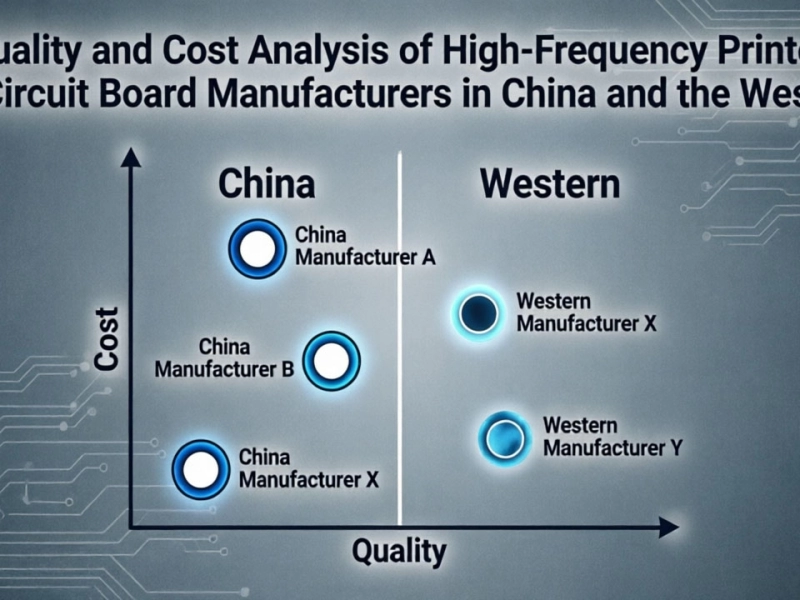
Quality and Cost Analysis of High-Frequency Printed Circuit Board Manufacturers in China and the WestJune/04/2026

How High Frequency PCB Applications are Powering the AI Server RevolutionAugust/03/2026
From Prototype to Mass Production: Scaling with a Reliable High Frequency PCB ManufacturerJuly/13/2026
Why Certifications Matter: IATF16949 and ISO Standards for Your High Frequency PCB ManufacturerJune/17/2026

The Role of AI in Modern High Frequency PCB Manufacturing: Precision and EfficiencyJune/30/2026
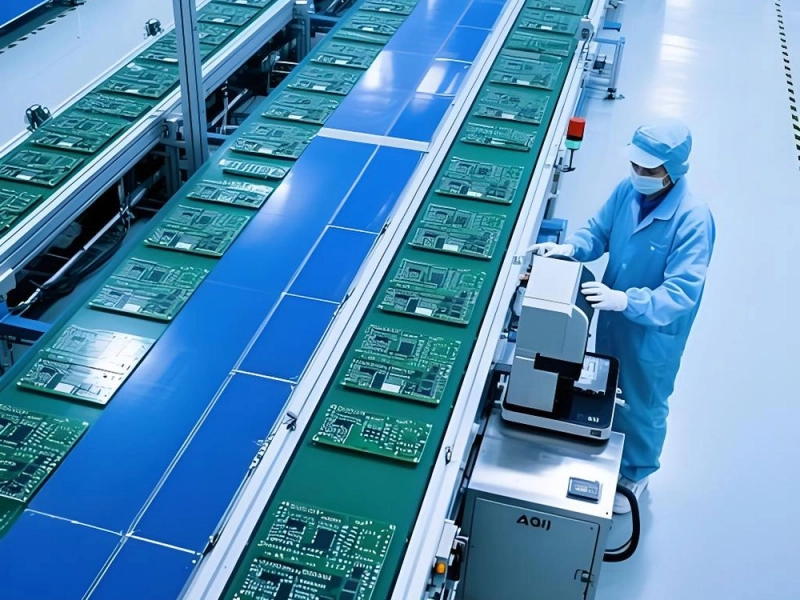
7 Key Factors to Consider When Choosing a High Frequency PCB ManufacturerMay/29/2026

How to Vet a High Frequency PCB Manufacturer for 5G and Millimeter Wave ProjectsJuly/25/2026