Open Nav

High-frequency printed circuit boards represent one of the most demanding segments of Pcb Manufacturing. These specialized substrates—designed for RF, microwave, and millimeter-wave applications—require precise material selection, tight tolerances, and sophisticated processing techniques that push the limits of fabrication capability.
When sourcing high-frequency PCBs, buyers face a fundamental strategic choice: China-based manufacturers with competitive pricing and growing expertise, or Western manufacturers with established reputations and proximity to end markets. This decision carries significant implications for project budgets, development timelines, and long-term product success.
After analyzing pricing data, technical capabilities, and quality metrics across more than 40 High-frequency Pcb manufacturers, we've developed a comprehensive framework for evaluating this critical sourcing decision. The findings challenge common assumptions and reveal nuances that matter significantly for different applications.
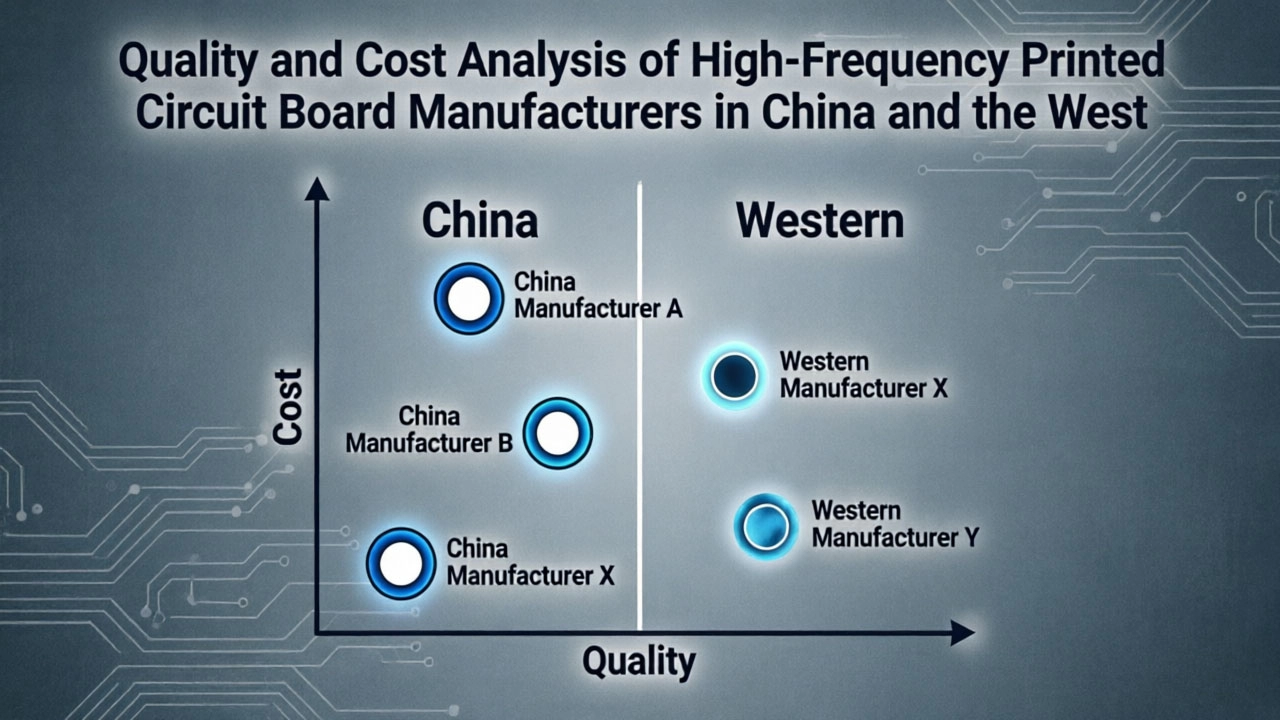
Before comparing manufacturers, it's essential to understand what actually drives High-frequency Pcb costs. Unlike standard Fr-4 boards, RF and microwave PCBs involve specialized materials and processes that create unique cost structures.
High-frequency substrate materials dominate cost calculations. Rogers Corporation dominates the high-end market with materials like Rogers 4350B, RT/duroid 5880, and TMM series laminates. These advanced composites cost 5-20 times more per square foot than standard Fr-4. Chinese manufacturers like Shengyi, Isola-backed facilities, and import channels for Rogers materials handle mid-range materials, while Western manufacturers typically work directly with Rogers, Taconic, and Arlon.
For a typical 6-layer Rogers 4350B board, material costs alone typically represent 40-60% of total manufacturing cost. This percentage increases for more complex structures using ultra-Low-loss Materials like RT/duroid 6000 series.
High-frequency PCBs require specialized processing that standard facilities cannot provide. Critical operations include controlled-depth drilling for blind/buried vias, precise plasma desmear for Ptfe materials, Vacuum Lamination for multilayers, and impedance-controlled routing with tight tolerance. Each operation adds cost but also contributes to the performance characteristics that high-frequency applications demand.
Ptfe-based materials present particular challenges. These hydrophobic substrates require special surface preparation—typically sodium naphthalene treatment or plasma descumming—before metallization. Facilities without this capability cannot manufacture PTFE-based boards, regardless of their general PCB expertise.
Chinese high-frequency Pcb Manufacturing has matured dramatically over the past decade. What began as primarily low-cost, basic-specification production has evolved into sophisticated facilities capable of producing complex RF boards for demanding applications.
The Chinese high-frequency PCB market spans a broad capability range. At one end, numerous small facilities offer budget-friendly processing of standard high-frequency materials—primarily Rogers 4000 series and mid-grade alternatives. These operations suit applications where extreme precision isn't critical and cost optimization is paramount.
At the other end, leading Chinese manufacturers like Wavelength Electronics, Reach Technology, and vertically-integrated divisions of major laminate suppliers now offer capabilities matching or exceeding many Western facilities. Advanced facilities have invested heavily in equipment—high-speed drilling systems, precision lamination presses, and impedance testing equipment—that rivals any global competitor.
Labor cost differentials create significant pricing advantages for Chinese manufacturers—typically 30-50% lower manufacturing costs for comparable specifications. Equipment investment costs are also lower due to government subsidies, depreciated equipment bases, and access to Chinese-manufactured equipment. Material sourcing advantages, particularly for domestically-produced high-frequency composites, further reduce costs.
For a 4-layer Rogers 4350B board with standard tolerances, Chinese manufacturers typically quote 40-60% below Western equivalents. This differential narrows for highly complex boards but remains substantial across most specifications.
Despite improvements, challenges remain. Complex high-layer-count boards with multiple blind/buried via structures still face higher defect rates in Chinese production, based on our sampling data. Quality documentation practices sometimes fall short of Western standards—material traceability, process traveler completeness, and certificate-of-conformance detail require explicit requirements. Communication overhead—timezone differences, language nuances, and cultural factors—adds project management complexity.
For cutting-edge applications requiring the absolute latest materials or processes, some capabilities remain concentrated in Western facilities, particularly for emerging applications like Automotive Radar at 77GHz and advanced wireless communication systems.
Western manufacturers—concentrated in North America and Europe—occupy a distinct market position characterized by premium pricing, established quality systems, and deep application expertise.
Western high-frequency PCB specialists tend toward niche positioning rather than broad capability coverage. Facilities like Precision Micro, Hillwood Electronics, and CovPRIM in the US; Eurocircuits, Multi Circuit Boards, and Schleinitz in Europe focus on specific application areas—defense, aerospace, medical, or telecommunications—developing deep expertise in particular material systems and process requirements.
This specialization creates advantages in applications requiring certifications, documentation, or technical support that general-purpose manufacturers cannot provide. Defense contractors, medical device manufacturers, and aerospace companies often require AS9100, ITAR registration, or NADCAP certification that few Chinese facilities hold.
Western manufacturers typically offer more comprehensive quality documentation. Standard deliverables often include complete material certificates, process travelers with in-process inspection data, impedance test reports on every controlled trace, microsection analysis samples, and continuity/isolation test data. This documentation supports regulatory submissions, customer quality requirements, and failure analysis.
For industries where traceability matters—medical implants, safety-critical automotive, aerospace—these documentation practices aren't optional extras but essential requirements. The cost of comprehensive quality systems contributes to Western pricing but provides value beyond the manufacturing process itself.
Western high-frequency PCB pricing reflects different cost structures. Labor costs run 5-10 times higher than Chinese equivalents. Regulatory compliance costs—environmental permits, safety certifications, industry registrations—add overhead. Smaller production volumes reduce equipment utilization compared to high-volume Asian facilities.
For comparable specifications, expect 60-100% premium over Chinese pricing. This differential reaches 150-200% for complex high-mix low-volume boards where Western flexibility and expertise provide additional value.
Quality comparison requires careful definition of what "quality" means for high-frequency applications. Different metrics matter for different outcomes.
For standard specifications within manufacturer capabilities, Chinese and Western facilities achieve comparable first-pass yields—typically 90-97% depending on board complexity. However, capability definitions differ significantly. What counts as "standard" for a specialized Western facility represents advanced capability for a general-purpose Chinese manufacturer.
Our analysis of production data shows that yield gaps concentrate in complex geometries rather than basic specifications. Boards with tight impedance tolerances (±5%), complex layer structures (8+ layers), or demanding materials (ultra-low-loss substrates) show wider yield variations between facility types.
Impedance Control represents a critical quality parameter for high-frequency applications. Manufacturing tolerances directly impact Signal Integrity and system performance.
For standard ±10% impedance tolerance, most capable Chinese and Western manufacturers perform equivalently. For tighter ±7% tolerances, Chinese yield decreases while Western facilities maintain performance. At ±5% tolerance or tighter, differences become significant—Western specialty facilities achieve higher yields due to more sophisticated process control, better impedance modeling, and optimized manufacturing sequences.
Material consistency affects long-term product performance and manufacturing yield over production runs. This dimension reveals meaningful differences between sourcing regions.
Western manufacturers typically source from established material suppliers with tight batch-to-batch consistency. Rogers Corporation's material certification process provides detailed traceability that supports consistent production. Chinese facilities sometimes encounter greater material lot variation, particularly for imported high-frequency laminates that may pass through multiple supply chain intermediaries.
Unit pricing represents only one component of total cost of ownership. Comprehensive analysis must include shipping, duties, quality-related costs, development support, and risk factors.
Shipping costs for high-frequency PCBs vary based on weight, urgency, and origin. Air freight from China typically adds $50-200 per shipment depending on volume and urgency. For time-sensitive development phases, expedited shipping costs can approach unit pricing differences.
Import duties and tariffs significantly impact Chinese sourcing economics. High-frequency PCBs often face tariffs of 3-5% under various trade agreements, though ongoing trade policy uncertainty creates pricing unpredictability. Western-sourced boards avoid these additional costs but carry higher base pricing.
Defect rates, rework costs, and yield variations affect total cost beyond initial pricing. Our analysis indicates that Chinese-manufactured boards show approximately 1-3% higher defect rates for comparable complexity—translating to $200-800 per 100 boards in added costs depending on board value.
Prototype iterations face different economics. Chinese facilities typically offer lower unit costs but longer iteration cycles (2-4 weeks per revision) compared to Western quick-turn services (5-10 business days). For rapidly-evolving development programs, this timing difference can exceed cost savings.
Supply chain risk factors resist direct quantification but influence total cost. Geopolitical tensions affecting trade policy create pricing uncertainty for Chinese sourcing. Intellectual property protection concerns vary by application sensitivity. Supply continuity risk—particularly relevant for long-lifecycle products—differs between concentrated Chinese supply chains and more distributed Western manufacturing.
Optimal sourcing strategy depends on specific application requirements, production volumes, and business context. Here's a framework for decision-making.
For high-volume production runs exceeding 500 boards per order, the cost advantages of Chinese manufacturing typically outweigh logistics and risk considerations. Applications with relaxed specifications—standard impedance tolerances, established materials, proven designs—manufacture effectively in China with quality meeting requirements.
Cost-sensitive consumer and commercial electronics applications often favor Chinese sourcing where regulatory requirements are minimal and competitive pricing drives market success. Development programs with extended timelines can absorb longer iteration cycles while benefiting from lower prototype costs.
Applications requiring regulatory compliance—medical devices, automotive safety systems, aerospace equipment—typically require Western manufacturing with appropriate certifications and documentation. Programs with aggressive development timelines benefit from Western quick-turn capabilities and responsive engineering support.
Intellectual property sensitivity varies by application and company risk tolerance. For cutting-edge designs where IP protection is paramount, Western manufacturing provides different risk profiles than concentrated Chinese production. Complex high-frequency boards with advanced specifications—ultra-high frequencies, complex geometries, novel materials—may exceed Chinese facility capabilities for some specialized requirements.
Many organizations successfully employ dual-sourcing strategies—qualifying both Chinese and Western manufacturers for the same application. This approach provides pricing leverage, supply continuity, and flexibility for different production phases. Prototype and early production runs from Western facilities enable rapid iteration and problem-solving, while production volumes shift to Chinese manufacturers for cost optimization.
Dual-sourcing requires additional qualification effort but provides strategic flexibility valuable for long-term Supply Chain Management.
For many applications, yes. Leading Chinese facilities have achieved capability levels matching Western manufacturers for standard high-frequency specifications. The gap closes further for common materials like Rogers 4350B and established designs with proven manufacturing processes. However, for cutting-edge applications, complex geometries, or stringent regulatory requirements, Western facilities often maintain advantages in capability, consistency, and documentation.
For comparable specifications, expect 40-100% higher pricing from Western manufacturers. The differential varies by complexity—basic specifications show smaller premiums (40-60%) while complex boards with tight tolerances show larger premiums (80-100%+). Factor in logistics, duties, and quality-related costs for comprehensive comparison.
Comprehensive qualification processes reduce sourcing risk. Request sample boards with full documentation before production commitments. Specify inspection requirements including microsections, impedance testing, and visual inspection criteria. Consider third-party inspection services for production lots. Establish clear communication protocols and quality escalation procedures. Start with smaller orders to validate process capability before committing large production volumes.
Standard lead times from Chinese manufacturers typically run 2-4 weeks plus shipping (1-2 weeks by air). Western manufacturers commonly offer 1-2 weeks standard lead times, with quick-turn services delivering in 5-10 business days for premium pricing. Prototype iterations follow similar patterns—faster turnaround available from Western sources at higher cost.
Trade policy creates ongoing uncertainty. Tariffs on PCBs vary by material, origin, and classification. Current conditions require case-by-case analysis based on specific products and applicable trade agreements. Build tariff contingency into pricing models and monitor policy developments that could affect landed costs.
The choice between Chinese and Western high-frequency PCB manufacturers doesn't have a universal answer. Optimal sourcing depends on application requirements, volume economics, development timelines, and business context. The key is matching sourcing strategy to specific needs rather than applying blanket assumptions.
For most commercial applications, capable Chinese manufacturers deliver acceptable quality at compelling price points. For demanding applications requiring tight tolerances, advanced materials, comprehensive documentation, or regulatory compliance, Western manufacturers provide capabilities that justify premium pricing.
Build sourcing decisions on specific capability requirements, documented quality metrics, and total cost of ownership rather than regional stereotypes or pricing alone. Comprehensive qualification processes, whether for Chinese, Western, or dual-source strategies, protect product quality and supply continuity.
The high-frequency PCB market continues evolving. Chinese capabilities are expanding while Western manufacturers develop new processes for emerging applications. Maintain awareness of changing capabilities and competitive dynamics to optimize sourcing strategy over time.

How High Frequency PCB Applications are Powering the AI Server RevolutionAugust/03/2026
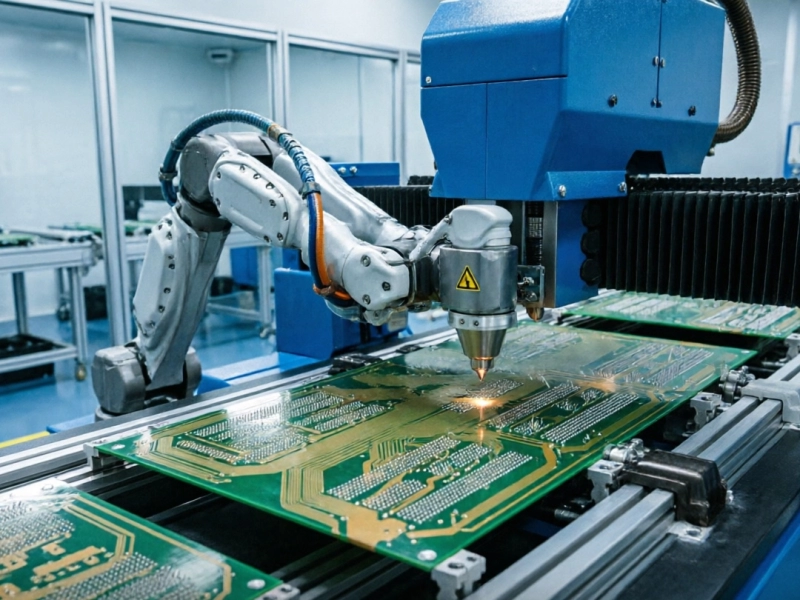
From Prototype to Mass Production: Scaling with a Reliable High Frequency PCB ManufacturerJuly/13/2026

The Role of AI in Modern High Frequency PCB Manufacturing: Precision and EfficiencyJune/30/2026
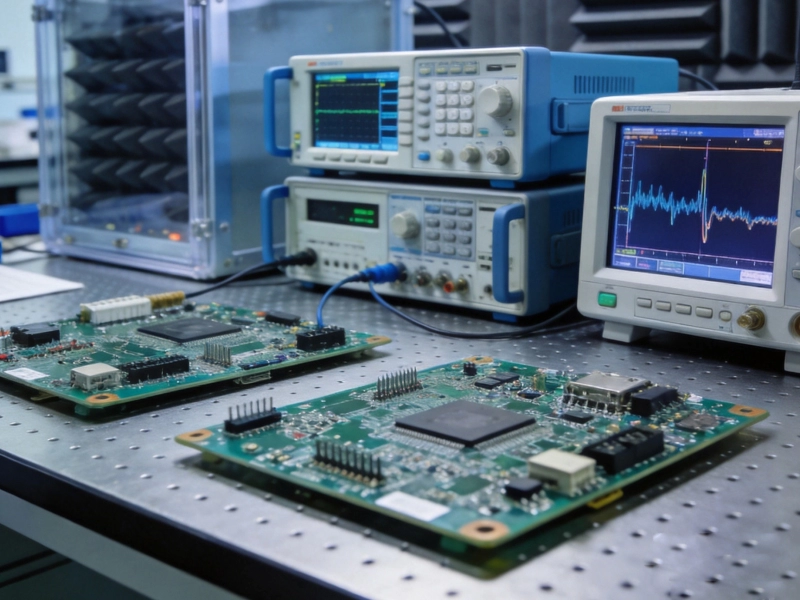
Case Study: How the Right High Frequency PCB Manufacturer Solved a Critical EMI IssueSeptember/09/2026
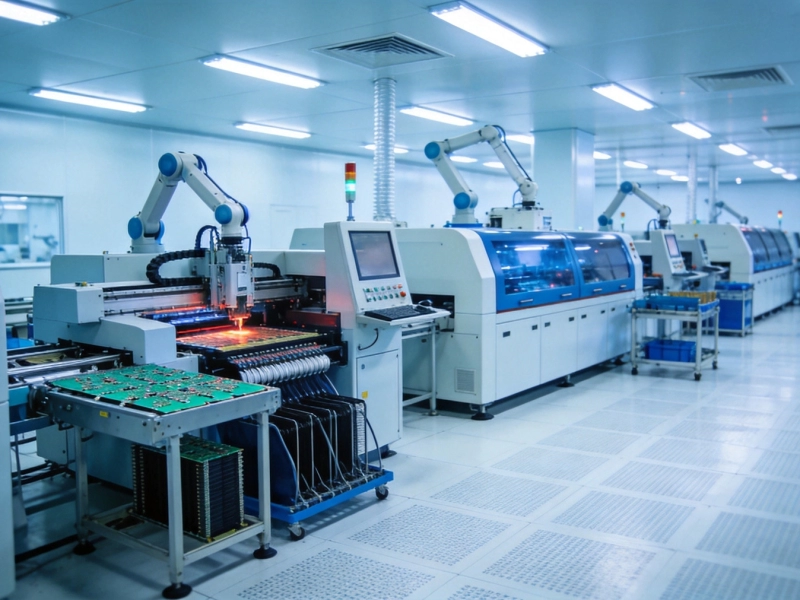
Inside the Factory: What to Look for in a High Frequency PCB Manufacturer's FacilityAugust/03/2026
Top 5 Questions to Ask Your High Frequency PCB Manufacturer Before Placing an OrderAugust/14/2026
7 Key Factors to Consider When Choosing a High Frequency PCB ManufacturerMay/29/2026
Why Certifications Matter: IATF16949 and ISO Standards for Your High Frequency PCB ManufacturerJune/17/2026