Open Nav

The journey from electronic prototype to Mass Production represents one of the most challenging transitions in product development. For high frequency PCB applications—5G infrastructure, radar systems, Satellite Communications, and advanced driver assistance systems—this transition carries additional complexity. High frequency designs demand specialized materials like Rogers Laminates, precision Impedance Control, and manufacturing processes that tolerate no margin for error. Successfully navigating this journey requires finding a manufacturing partner capable of supporting both the iterative needs of prototyping and the scale requirements of volume production.
Many product teams discover too late that their prototype manufacturer lacks volume production capabilities, or worse, that their volume manufacturer cannot replicate prototype quality. This misalignment creates delays, cost overruns, and potentially catastrophic field failures. Understanding how to evaluate and partner with high frequency PCB manufacturers throughout the product lifecycle prevents these problems and enables smooth scaling from first prototypes to millions of shipped units.
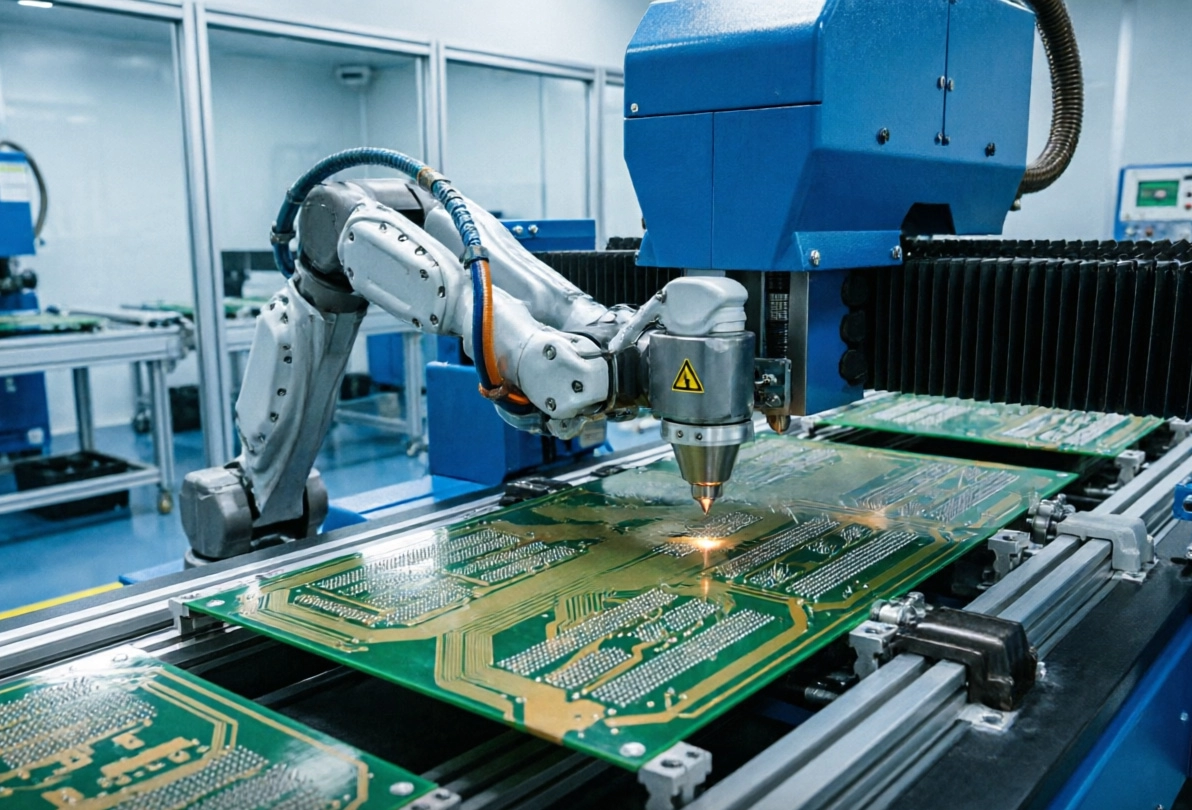
high frequency pcb applications operate at frequencies from MHz to mmWave ranges, requiring laminate materials specifically engineered for RF performance. Unlike standard Fr-4 materials optimized for digital signals, high frequency applications demand:
These specialized materials come with higher costs, more demanding processing requirements, and longer lead times than commodity laminates. Prototype quantities might justify premium pricing, but volume production requires manufacturing partners who can optimize processes for these materials without excessive waste.
high frequency pcb designs push manufacturing tolerances to their limits:
These requirements mean that manufacturing processes must achieve consistency levels exceeding typical commercial PCB Fabrication. A prototype might be hand-crafted to meet specifications, but Mass Production requires systematic processes that repeat those specifications across thousands of boards.
Not all High Frequency Pcb manufacturers support both prototyping and production at equal levels. When evaluating potential partners, assess:
The most important assessment criterion is whether the manufacturer can demonstrate consistency between prototype samples and production boards. Request cross-section analysis comparing prototype builds to production samples to verify that processes scale without degrading quality.
Prototype manufacturers often succeed through intensive engineering attention, while production success requires systematic process control. Production-ready manufacturers demonstrate:
Ask potential manufacturers for process capability studies on the parameters most critical to your application. Manufacturers confident in their processes will share this data readily.
Successful scaling begins during prototype development. Design for Manufacturability (Dfm) reviews during prototyping identify potential production problems before they become expensive to fix. Effective DFM for high frequency applications addresses:
Manufacturers who provide thorough DFM feedback during prototyping help ensure that designs transition smoothly to production. This early engineering investment pays dividends throughout the product lifecycle.
Every prototype build generates valuable manufacturing knowledge. Documenting prototype processes enables smooth production transitions:
Share this documentation with your volume production partner. The more context they have about design intent and prototype learning, the better they can optimize production processes.
Before committing to volume production, validate that the manufacturer can produce boards meeting all specifications. First Article Inspection (FAI) processes verify:
For high frequency applications, extend qualification testing to include RF performance validation. Measure Insertion Loss, return loss, and other frequency-dependent characteristics to confirm that production boards match prototype performance.
Beyond single board qualification, validate that manufacturing processes remain stable across production volumes. Process qualification typically includes:
Some organizations implement production validation stages—starting with small production batches, validating quality, then gradually increasing volume as confidence builds. This staged approach limits risk exposure during transitions.
Volume production economics differ significantly from prototyping. Design modifications optimized for production efficiency can substantially reduce per-board costs:
Work with your manufacturer to identify panelization opportunities that don't compromise quality. These production-focused optimizations often reduce costs by 15-30% compared to prototype-oriented designs.
Material costs often represent 40-60% of High Frequency Pcb pricing. Production optimization should address material sourcing:
High Frequency Materials like Rogers Laminates often have longer supply chains than commodity materials. Developing material supply chain resilience protects production continuity.
Successful prototype-to-production transitions require ongoing collaboration structures:
Establish these structures before you need them. The time invested in building collaborative relationships pays returns when problems inevitably arise.
Volume production creates dependencies that require risk management:
The 2020-2023 component shortage crisis demonstrated how supply chain disruptions can derail product programs. Manufacturers who invested in supply chain resilience weathered the crisis better than those caught unprepared.
Track quality performance through established metrics:
Establish quality targets aligned with your application requirements. High reliability applications like automotive or medical demand targets exceeding 99.5% first pass yield, while consumer applications might tolerate lower initial targets.
Beyond quality, track operational performance:
Share performance metrics with your manufacturing partners. Transparency about expectations and results builds trust and enables collaborative problem-solving.
Transitioning from prototype to mass production represents a critical inflection point in high frequency PCB product development. The complexity of RF and microwave manufacturing—specialized materials, tight tolerances, demanding test requirements—amplifies both the opportunities and risks in this transition.
Success requires finding manufacturing partners who can support both the iterative needs of prototyping and the systematic requirements of volume production. These partners provide DFM guidance during development, validate production readiness during transition, and optimize processes for volume economics once production stabilizes.
The investment in building strong manufacturer relationships during prototype stages pays returns throughout the product lifecycle. Manufacturers who understand your products, anticipate your needs, and invest in your success become strategic partners rather than mere vendors. In competitive markets where time-to-market and quality matter, these partnerships create sustainable competitive advantages.
As high frequency applications continue expanding—from 5G rollout to Automotive Radar to Satellite Communications—the manufacturers who master prototype-to-production transitions will capture growing market opportunities. Start building those capabilities today.
Key criteria include: experience with your specific high frequency materials (Rogers, Taconic, etc.), demonstrated capability to meet your impedance tolerances, quality certifications relevant to your market (IATF 16949 for automotive, AS9100 for aerospace), testing capabilities for RF performance validation, and capacity for both prototype and production volumes. Request sample builds and cross-section analysis to verify that prototype and production quality match.
Ensure consistency through: detailed documentation of prototype processes and parameters, DFM reviews during development that address producibility, first article inspection validating production capability, process qualification runs across multiple production lots, and ongoing quality metrics tracking once in production. The key is treating production qualification as seriously as the original prototype development.
Lead times vary based on complexity and material availability. Standard high frequency boards might require 10-15 days for production plus shipping. Complex multilayer RF designs with specialty materials could require 3-4 weeks. Stocking programs for common materials can reduce lead times significantly for volume production arrangements.
Cost reduction strategies include: panelization optimization to increase board density per panel, material standardization reducing variety and enabling volume purchasing, long-term pricing agreements with manufacturers, production process optimization based on prototype learning, and design modifications that improve manufacturability without sacrificing RF performance.
Qualification testing for high frequency PCBs typically includes: dimensional inspection, electrical continuity and isolation testing, Impedance Measurement using Tdr methods, visual and mechanical inspection, cross-section analysis for critical features, and RF performance testing (Insertion Loss, return loss) for frequency-dependent characteristics. High reliability applications may require additional thermal cycling, humidity testing, or accelerated life testing.
Inside the Factory: What to Look for in a High Frequency PCB Manufacturer's FacilityAugust/03/2026
7 Key Factors to Consider When Choosing a High Frequency PCB ManufacturerMay/29/2026
How to Vet a High Frequency PCB Manufacturer for 5G and Millimeter Wave ProjectsJuly/25/2026
Why Certifications Matter: IATF16949 and ISO Standards for Your High Frequency PCB ManufacturerJune/17/2026
Case Study: How the Right High Frequency PCB Manufacturer Solved a Critical EMI IssueSeptember/09/2026

How High Frequency PCB Applications are Powering the AI Server RevolutionAugust/03/2026
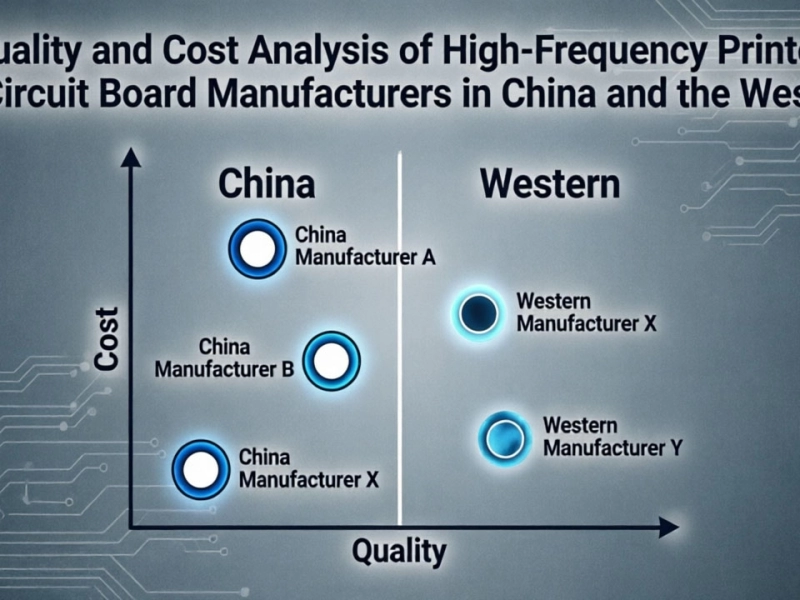
Quality and Cost Analysis of High-Frequency Printed Circuit Board Manufacturers in China and the WestJune/04/2026

The Role of AI in Modern High Frequency PCB Manufacturing: Precision and EfficiencyJune/30/2026