
When selecting a high frequency PCB manufacturer for your automotive, telecommunications, or Industrial Electronics project, specifications like Dielectric Constant and Signal Integrity are naturally top of mind. But there's another critical factor that often gets overlooked until problems emerge: certifications and quality standards.
Certifications like IATF16949 and ISO 9001 aren't just bureaucratic badges to display on a website. They represent systematic approaches to quality management, continuous improvement, and customer satisfaction that directly impact the reliability of your products and the stability of your supply chain.
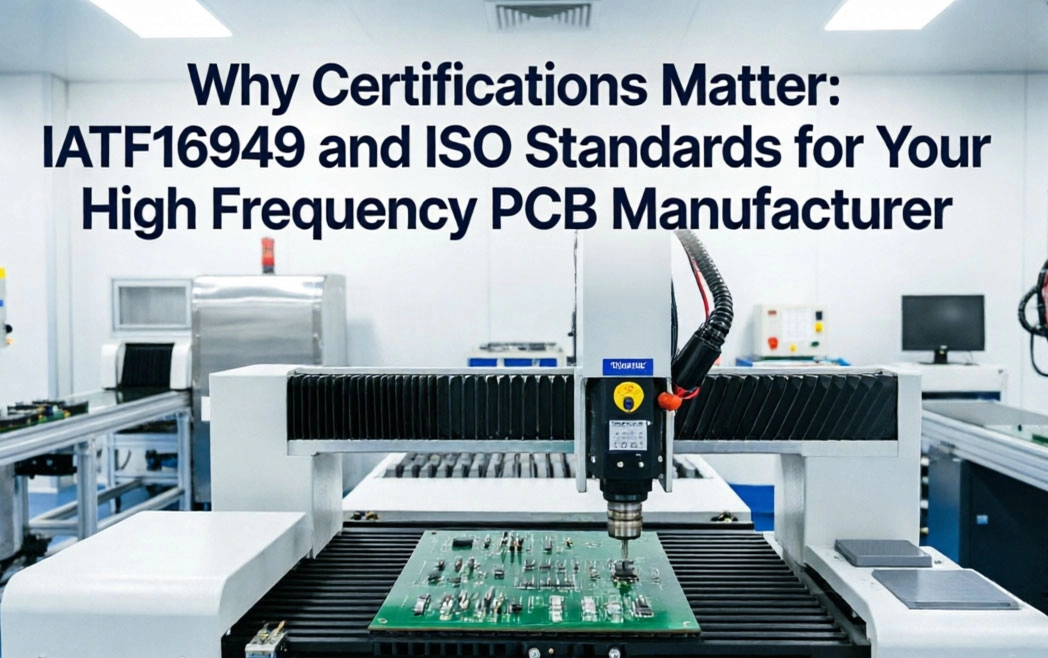
IATF16949 is the global quality management standard for the automotive industry. Originally developed by the International Automotive Task Force, it combines ISO 9001 foundations with automotive-specific requirements that address the unique challenges of vehicle electronics manufacturing.
If your high frequency PCBs will end up in automotive applications—Adas systems, infotainment, electric vehicle Power Electronics, or safety-critical sensors—working with an IATF16949 certified manufacturer isn't optional. It's a fundamental requirement for entering the automotive supply chain.
The standard emphasizes several areas particularly relevant to Pcb Manufacturing:
high frequency PCB manufacturing presents unique challenges that IATF16949 addresses through rigorous process control:
When an automotive OEM or Tier 1 supplier audits your manufacturer, IATF16949 certification provides documented evidence that these requirements are systematically addressed.
ISO 9001 is the world's most recognized quality management standard. While not industry-specific like IATF16949, it establishes the framework for consistent quality, customer focus, and operational excellence that benefits any electronics manufacturing operation.
For PCB manufacturers, ISO 9001 certification demonstrates commitment to:
ISO 9001 certified manufacturers must maintain:
Beyond the foundational ISO 9001, several specialized ISO standards are relevant to high frequency pcb manufacturing:
For PCBs used in rail transportation, ISO/TS 22163 (International Railway Industry Standard) addresses the specific quality, safety, and reliability requirements of the rail sector. Rail applications demand exceptional reliability given the safety-critical nature of railway electronics.
While not exclusively a PCB standard, ISO 13485 applies to PCB manufacturers serving the medical device industry. This standard emphasizes risk management, traceability, and documentation requirements that exceed standard electronics quality levels.
The current version of ISO 9001 emphasizes risk-based thinking and context of the organization more heavily than previous versions. Manufacturers certified under the 2015 revision have demonstrated capabilities in understanding their operating environment and addressing relevant risks and opportunities.
Achieving and maintaining certification isn't a one-time event. Manufacturers undergo:
For you as a customer, this means the manufacturer you're working with has been independently verified—not just self-assessed—as capable of meeting these rigorous requirements.
Certified manufacturers conduct both internal audits (using trained internal auditors) and host external audits from certification bodies. The combination provides:
Not all claimed certifications are legitimate. Before finalizing your supplier selection, verify:
Even with certifications, watch for:
When evaluating potential high frequency pcb manufacturers, ask:
The best manufacturers go beyond minimum certification requirements. Look for evidence of:
While a non-certified manufacturer might offer lower prices, the hidden costs add up:
The impact extends beyond immediate expenses:
When comparing manufacturers, consider total cost of ownership rather than unit price alone. A manufacturer with IATF16949 certification might quote 5-10% higher, but their documented processes, lower defect rates, and proactive quality management typically deliver:
Different applications require different certification levels:
For critical applications, consider implementing additional qualification steps:
ISO 9001 is a generic quality management standard applicable to any organization. IATF16949 builds on ISO 9001 with automotive-specific requirements addressing the unique challenges of vehicle supply chains, including safety-critical components, traceability, and customer-specific requirements. IATF16949 cannot stand alone—it requires ISO 9001 as its foundation.
IATF16949 certification is valid for three years, with surveillance audits conducted at least annually. The recertification audit occurs before the certificate expires to ensure continuous compliance. Manufacturers that fail surveillance audits or don't resolve nonconformities face certificate withdrawal.
Yes, IATF16949 certification is available to manufacturers of any size that operate in the automotive supply chain. However, smaller manufacturers may face greater resource challenges in maintaining the extensive documentation and process control required. When evaluating smaller certified manufacturers, pay particular attention to their documented procedures and internal audit capabilities.
Request the certificate itself (which should include the certificate number, scope, and expiration date), then verify it through the issuing certification body's website. Ask for copies of recent audit reports with any nonconformities and corrective actions. Request examples of how the manufacturer has handled quality issues for other customers. Finally, ask about their approach to the specific challenges relevant to your application, such as high frequency material traceability or Impedance Control.
Absolutely. Certified manufacturers typically demonstrate lower defect rates, better traceability, more consistent process capability, and faster issue resolution. Their systematic approaches to quality management translate into fewer production delays, reduced inspection requirements for your team, and higher confidence that products will meet specifications consistently. Many customers find that certified suppliers require less oversight and qualification effort over time.
Selecting the right High Frequency Pcb Manufacturer requires balancing technical capabilities with quality system maturity. Certifications provide objective evidence of a manufacturer's commitment to quality and their ability to meet rigorous industry requirements. Don't leave quality to chance—make certification verification a standard part of your supplier selection process.
Top 5 Questions to Ask Your High Frequency PCB Manufacturer Before Placing an OrderAugust/14/2026
From Prototype to Mass Production: Scaling with a Reliable High Frequency PCB ManufacturerJuly/13/2026

How to Vet a High Frequency PCB Manufacturer for 5G and Millimeter Wave ProjectsJuly/25/2026
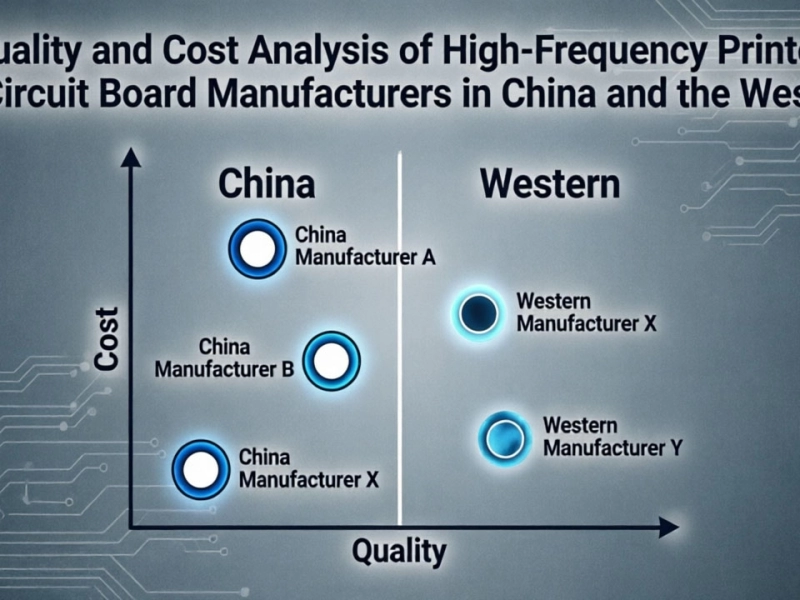
Quality and Cost Analysis of High-Frequency Printed Circuit Board Manufacturers in China and the WestJune/04/2026
Case Study: How the Right High Frequency PCB Manufacturer Solved a Critical EMI IssueSeptember/09/2026

The Role of AI in Modern High Frequency PCB Manufacturing: Precision and EfficiencyJune/30/2026

How High Frequency PCB Applications are Powering the AI Server RevolutionAugust/03/2026
Inside the Factory: What to Look for in a High Frequency PCB Manufacturer's FacilityAugust/03/2026