Open Nav

China has established itself as the global hub for electronics manufacturing, producing over half of the world's printed circuit boards and hosting thousands of surface mount technology assembly facilities. For companies seeking to outsource their industrial Pcb Assembly, the Chinese market offers compelling advantages in cost efficiency, manufacturing scale, and technical capabilities. However, the vast number of suppliers ranging from world-class facilities to small workshops creates significant challenges in identifying reliable partners capable of meeting industrial quality standards.
Sourcing reliable industrial Smt Pcb Assembly requires more than comparing quotes and lead times. Industrial applications demand consistent quality, traceability, and adherence to international standards that not every manufacturer can deliver. Understanding how to evaluate potential suppliers, verify their capabilities, and establish productive partnerships separates successful sourcing initiatives from costly failures.

The Chinese Smt assembly market spans a wide spectrum of capabilities and service levels. At the top tier, major electronics manufacturing services providers operate facilities rivaling the best in the world, serving Fortune 500 companies with cutting-edge technology and comprehensive quality systems. These facilities handle complex industrial, automotive, and medical products requiring the highest reliability standards.
The mid-tier consists of specialized manufacturers focusing on specific industry segments or product categories. Many of these companies offer excellent value for industrial applications, combining solid technical capabilities with competitive pricing and greater flexibility than the largest providers. They often develop deep expertise in particular markets such as industrial automation, power electronics, or telecommunications equipment.
Lower-tier providers compete primarily on price, often sacrificing quality systems, equipment maintenance, and process control to offer lower quotes. While these suppliers may be suitable for consumer products with minimal reliability requirements, they pose unacceptable risks for industrial applications where failures can cause equipment downtime, safety hazards, or significant financial losses.
Geographic concentration characterizes the Chinese electronics manufacturing landscape. The Pearl River Delta encompassing Shenzhen, Dongguan, and Guangzhou hosts the densest concentration of PCB and assembly facilities. The Yangtze River Delta around Shanghai offers another major hub with strong logistics infrastructure. More recently, interior provinces have developed manufacturing capabilities, often with government support and lower labor costs.
Qualifying potential SMT assembly partners begins with fundamental verification of their business legitimacy and operational capabilities. Basic due diligence includes confirming business registration, visiting manufacturing facilities, and reviewing their customer portfolio. Reputable suppliers welcome such inquiries and provide transparent access to their operations.
Quality certifications provide important baseline indicators of a supplier's commitment to systematic quality management. Iso 9001 certification demonstrates fundamental quality system implementation, though the scope and rigor of these systems vary significantly. For industrial applications, additional certifications may be required depending on the specific industry: IATF 16949 for Automotive Electronics, ISO 13485 for medical devices, or IPC-A-610 for general electronics workmanship standards.
Technical capabilities must align with product requirements. Key parameters include minimum component sizes supported, finest pitch capabilities for integrated circuits, board size and layer count limits, and special process capabilities such as conformal coating or potting. Industrial products often require robust processes for harsh environment operation, including extended temperature ranges, vibration resistance, or protection against moisture and contamination.
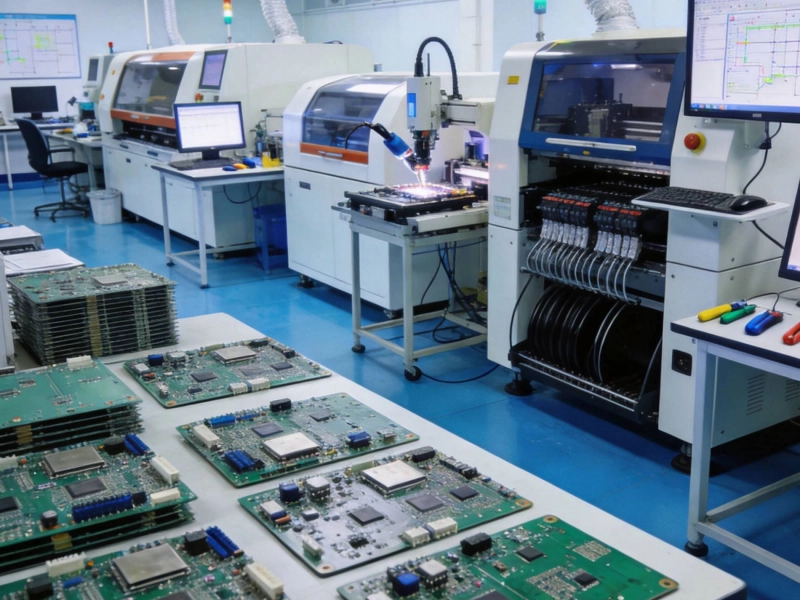
Equipment age and maintenance practices significantly impact quality consistency. Modern SMT lines with automated optical inspection, X-ray Inspection for BGA components, and automated testing capabilities reduce defect rates and improve traceability. Facilities relying on older equipment or manual inspection methods may struggle to maintain the consistency industrial applications require.
On-site facility assessments provide irreplaceable insights into a supplier's true capabilities. During facility visits, observe the cleanliness and organization of production areas, which correlates strongly with quality discipline. Well-maintained equipment, organized material storage, and clean work environments indicate professional management and attention to detail.
Production floor practices reveal operational maturity. Look for visual management systems displaying production metrics, quality data, and work instructions. Active use of statistical process control demonstrates commitment to quality improvement. The presence of dedicated quality personnel with authority to stop production for quality issues indicates a genuine quality culture rather than mere compliance.
Incoming material inspection processes protect against counterfeit or substandard components, a significant concern in the electronics industry. Reputable suppliers verify component authenticity, perform electrical testing on critical parts, and maintain detailed receiving records. Ask about their procedures for handling obsolete or end-of-life components, which require special sourcing strategies.
Process documentation and traceability systems enable root cause analysis when issues occur. Industrial applications typically require complete traceability from raw materials through finished products, including component lot numbers, production equipment used, and test results. Electronic manufacturing execution systems that track every production step provide the documentation industrial customers require.
Comprehensive testing capabilities distinguish reliable industrial suppliers from those focused on lower-tier markets. At minimum, suppliers should perform automated optical inspection after soldering to detect Component Placement errors, missing parts, and solder joint defects. X-ray Inspection capabilities are essential for products using BGA or QFN packages where solder joints are not visible optically.
In-circuit testing verifies component values and checks for manufacturing defects such as opens, shorts, and wrong components. Functional testing validates that assembled boards perform correctly under operating conditions. Industrial products often require extended temperature testing, burn-in screening, or environmental stress testing to ensure reliability in field conditions.
First article inspection processes ensure that production setups are correct before full production begins. Suppliers should perform comprehensive testing on initial production units, comparing actual measurements against design specifications and documenting any deviations. This process catches setup errors before they affect entire production runs.
Statistical process control data demonstrates process stability and capability. Suppliers tracking key process parameters such as solder paste volume, placement accuracy, and reflow profile consistency can identify trends before they produce defects. Request data showing process capability indices for critical parameters to assess the supplier's ability to maintain specifications.
Component sourcing capabilities significantly impact both cost and supply security. Established suppliers maintain relationships with authorized distributors and have systems for managing component lifecycle issues including obsolescence and allocation shortages. They can often leverage purchasing volume across multiple customers to achieve better pricing and availability.
Counterfeit component avoidance requires robust supplier qualification and incoming inspection procedures. Reputable manufacturers source exclusively through authorized distributors or directly from manufacturers, avoiding the gray market where counterfeit components proliferate. They perform visual inspection, X-ray inspection, and electrical testing to detect counterfeit parts before they enter production.
BOM optimization services can reduce costs without compromising quality. Experienced suppliers suggest alternative components with better availability or lower cost when appropriate, identify opportunities for component consolidation, and recommend design changes that improve manufacturability. These engineering services add value beyond simple assembly operations.
Inventory management and warehousing capabilities support flexible production scheduling. Suppliers with adequate component inventory can respond quickly to demand changes and manage supply disruptions. Evaluate their warehouse conditions, inventory management systems, and procedures for handling moisture-sensitive components.
Effective communication bridges geographic and cultural distances that complicate international sourcing relationships. English language capabilities vary widely among Chinese manufacturers; prioritize suppliers with technical staff fluent in English to ensure accurate communication of complex requirements. The availability of dedicated project managers who understand both technical and business aspects facilitates smooth collaboration.
Engineering support during new product introduction accelerates time-to-market and improves initial yields. Suppliers offering design for manufacturability reviews identify potential production issues before tooling is committed. Prototype assembly services with quick turnaround enable rapid design iteration before committing to production tooling.
Documentation and reporting practices should meet your requirements for production visibility. Regular production reports, quality data summaries, and open communication about any issues encountered demonstrate transparency and partnership orientation. The best suppliers proactively communicate potential problems and propose solutions rather than hiding issues.
Intellectual property protection concerns require attention when sharing design data with overseas suppliers. Reputable manufacturers sign non-disclosure agreements, implement data security protocols, and segregate customer information to prevent unauthorized access. Verify their IP protection practices and consider limiting information shared to what is necessary for production.
Financial stability assessment protects against supplier failures that could disrupt your supply chain. Private company financial information may be difficult to obtain, but indicators such as facility ownership versus leasing, equipment investment patterns, and payment terms requested provide insight into financial health. Public companies and those with audited financial statements offer greater transparency.
Payment terms and currency considerations affect both cost and risk. Common arrangements include deposits with order balance before shipment, or letters of credit for larger transactions. Currency fluctuations between order placement and delivery can impact costs; consider hedging strategies or negotiating pricing in your local currency for large orders.
Contract terms should clearly define quality standards, acceptance criteria, liability for defects, and intellectual property ownership. Specify required certifications, documentation, and traceability requirements. Include provisions for periodic audits and quality system reviews. Clear contracts prevent misunderstandings and provide recourse if expectations are not met.
Successful sourcing relationships develop over time through incremental trust building and mutual investment. Start with smaller orders to evaluate actual performance before committing critical products or large volumes. Use these initial engagements to assess communication effectiveness, quality consistency, and problem-solving capabilities under real conditions.
Regular business reviews maintain alignment and drive continuous improvement. Schedule periodic meetings to discuss performance metrics, upcoming product changes, and process improvements. Share forecast information to help suppliers plan capacity and material procurement. Treat suppliers as partners rather than commodities to secure their best efforts and capabilities.
Long-term agreements provide stability for both parties when the relationship proves valuable. Volume commitments, preferred supplier status, and joint investment in capabilities align incentives for mutual success. These arrangements typically yield better pricing, priority scheduling, and access to engineering resources than transactional relationships.
Contingency planning addresses risks of supply disruption from any source. Dual sourcing strategies reduce dependence on single suppliers, though they complicate supply chain management. Maintain relationships with backup suppliers qualified to produce your products if needed. Document processes and tooling thoroughly to facilitate supplier transitions if required.
Certain indicators suggest suppliers that may pose unacceptable risks for industrial applications. Prices significantly below market levels often signal shortcuts in quality, counterfeit components, or unsustainable business practices. While competitive pricing is desirable, unrealistic quotes should trigger careful scrutiny.
Reluctance to provide facility access, customer references, or detailed process information suggests either inexperience with Western customers or something to hide. Reputable suppliers welcome customer visits and transparently share information about their capabilities and practices. Evasive responses to reasonable inquiries indicate potential problems.
Inadequate quality documentation or inability to explain quality systems reveals superficial quality management. Ask to see inspection records, process control charts, and non-conformance tracking systems. Suppliers lacking these basic tools cannot maintain consistent quality or perform effective root cause analysis when issues occur.
Poor communication responsiveness during initial discussions typically worsens after order placement. Suppliers slow to respond to inquiries, unclear in their communications, or unable to address technical questions adequately will likely struggle to meet expectations. Clear, prompt communication during the courtship phase indicates organizational competence.
Sourcing reliable industrial SMT PCB assembly from Chinese manufacturers offers compelling advantages when approached with appropriate diligence and relationship management. The combination of manufacturing scale, technical capabilities, and competitive costs available in China can significantly strengthen your supply chain when partnered with the right suppliers.
Success requires moving beyond price-focused procurement to comprehensive supplier qualification and development. Invest time in understanding potential partners' capabilities, verifying their quality systems, and building relationships based on mutual benefit. The effort invested in supplier selection and development pays dividends through improved quality, reduced risk, and enhanced supply chain resilience.
The Chinese electronics manufacturing ecosystem continues to evolve, with increasing capabilities in advanced technologies and improving quality standards across the industry. Companies that develop sophisticated sourcing capabilities and strong supplier relationships position themselves to leverage these developments for competitive advantage in their markets.
Handling Sensitive ComponentsMay/29/2026

Why Component Placement is Critical in High Frequency PCB AssemblyJune/25/2026

High Frequency PCB Assembly Best Practices for 5G and RF ModulesJune/08/2026
Understanding Thermal Stability in High Frequency PCB MaterialsAugust/10/2026
The Challenges of High Frequency PCB Assembly: Handling Sensitive ComponentsMay/29/2026

The Importance of Thermal Management in High Frequency PCB AssemblyJuly/27/2026

Why Certifications Matter: IATF16949 and ISO Standards for Your High Frequency PCB ManufacturerJune/17/2026

Why Advanced Testing Equipment Defines Top High Frequency PCB CapabilitiesJuly/07/2026