Open Nav

Requesting a quote for high frequency PCB Fabrication feels deceptively simple. You send your design files to a manufacturer, wait for a response, and receive a number. In practice, this approach frequently produces quotes that are inaccurate, incomplete, or so delayed by clarification questions that they fail to serve the purpose of helping you make informed sourcing decisions. High frequency PCBs involve specifications and requirements that differ substantially from standard FR4 fabrication, and communicating those requirements clearly requires understanding what information manufacturers need and how to present it effectively. Getting this right the first time saves weeks of back-and-forth, produces more accurate pricing, and establishes a foundation for a productive manufacturing relationship.
This article walks through the complete process of requesting a high frequency PCB quote, from preparing your design data through evaluating the quotes you receive. Whether you are requesting your first Rf Pcb quote or looking to improve the efficiency of your existing quotation process, the guidance here will help you get better results with less effort.
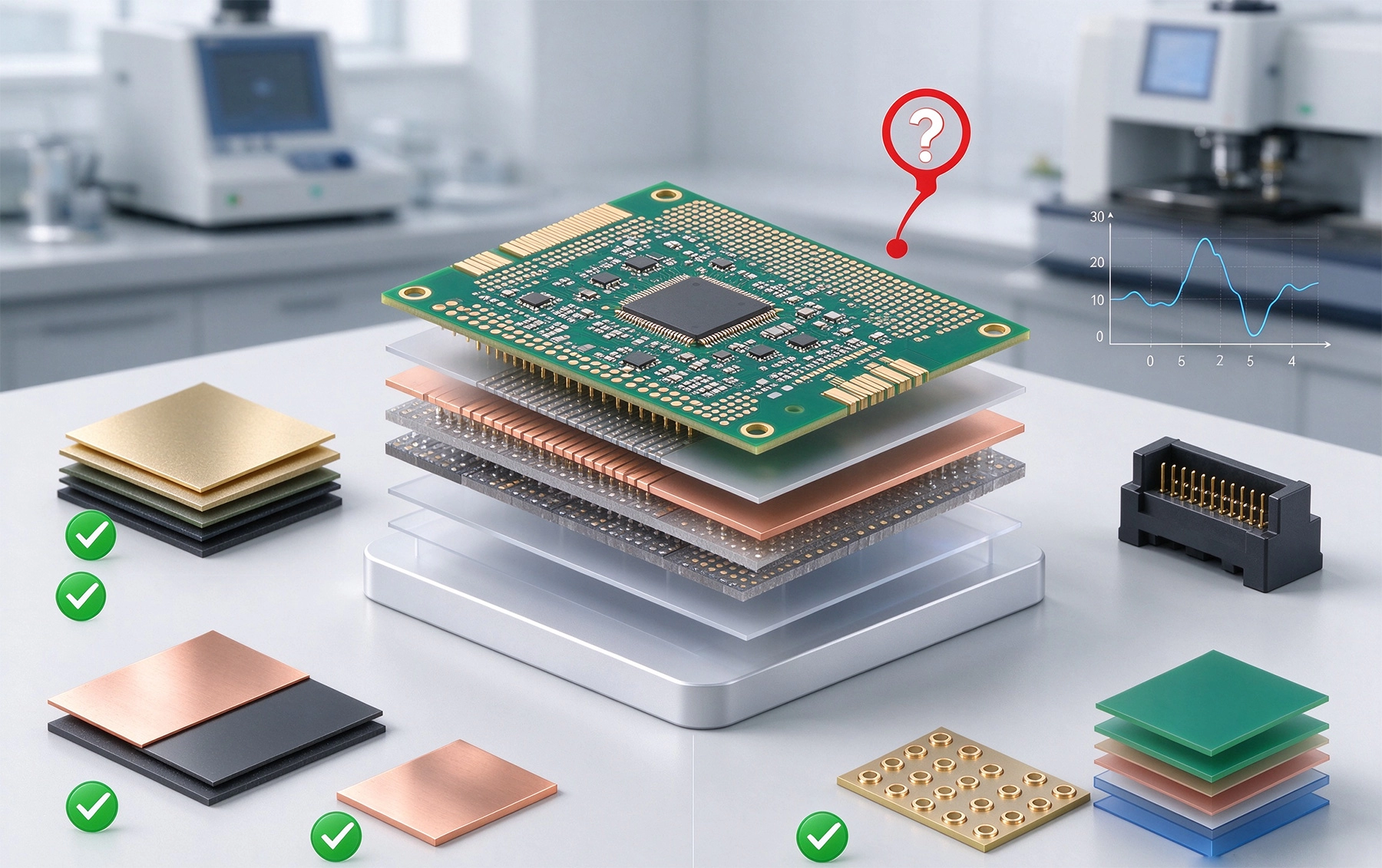
The foundation of an effective quote request is complete, accurate design data that communicates exactly what you need manufactured. For high frequency PCBs, this means more than just Gerber Files and a drill list. The electrical and material requirements that determine manufacturability and cost must be clearly specified, because unlike standard boards where the manufacturer can make reasonable assumptions, high frequency applications often have specific requirements that significantly affect how the board must be produced.
Gerber Files for each copper layer should follow industry-standard formats with complete aperture lists. Include all copper layers including inner layers, the solder mask layers for both sides, the silkscreen layers, and any special documentation layers your design may include. File naming should be clear and consistent so the manufacturer can easily identify which file corresponds to which layer without guessing. For high frequency boards, clearly identifying ground planes, signal layers, and power layers helps the manufacturer understand the construction and verify that their process can meet your requirements.
The drill file should include all through-hole and blind/buried via information in Excellon format with complete tool definitions. For high frequency boards with microvias, confirm that the drill file distinguishes between microvia holes and standard through-holes, as these require different drilling processes. Include any non-standard drill sizes or specialized routing operations that your design requires. Any information that is not in the drill file will have to be requested, adding delay to the quotation process.
The stack-up drawing is essential for high frequency PCB quotes. This document specifies the layer sequence, dielectric material and thickness for each layer, copper weight on each layer, and the overall board thickness. For boards with Controlled Impedance requirements, the stack-up drawing should include the impedance targets for each controlled trace with the associated tolerances. A manufacturer who does not receive a stack-up drawing must either assume a standard construction or request one, and either way the quote will be less accurate or slower than one based on explicit specifications.
Material selection is the single most impactful specification for high frequency pcb pricing and performance. The difference in cost and manufacturing approach between a board using standard FR4 and one using Rogers RT/duroid can be enormous, and manufacturers cannot guess which you need. Precise material specification ensures you receive accurate pricing and a manufacturing approach that will actually produce the electrical performance your design requires.
Identify the exact material type by manufacturer and product number rather than by generic description. Saying you need a board with low Dissipation Factor is ambiguous. Saying you need Rogers Ro4003c material with specific thickness and copper weight is precise and unambiguous. Include the specific Tg, Dielectric Constant, and Dissipation Factor if these are critical to your application, and note any frequency at which these values were specified if they vary with frequency. Some applications require tight tolerances on Dielectric Constant, which affects both material selection and manufacturing process control.
If your design can accept multiple material options, specify acceptable alternatives in order of preference. This allows manufacturers to quote the most cost-effective option they can produce while still meeting your requirements. It also provides a fallback if your first-choice material is not available or has extended lead time. For example, you might specify Rogers Ro4003c as preferred with Rogers Ro4350b as an acceptable alternative, or you might accept any hydrocarbon ceramic laminate with dissipation factor below 0.005.
Include any special material requirements such as halogen-free compliance, UL flammability rating, or specific thermal conductivity for Thermal Management purposes. These requirements affect material availability and pricing, and including them in the initial request prevents surprises when the manufacturer quotes only what was explicitly specified.
Most high frequency PCBs include Controlled Impedance traces, and the impedance requirements directly affect both the manufacturing approach and the price. A quote that does not account for Impedance Control may produce boards that are technically low priced but functionally inadequate for your application.
List each controlled impedance net or net class with the target impedance value and tolerance. Single-ended traces might require 50 ohms with a tolerance of plus or minus 5%. Differential pairs might require 100 ohms with a tolerance of plus or minus 10%. Be explicit about what tolerance you can accept, because tighter tolerances require more precise manufacturing control and add cost. If you do not need tight tolerance, specifying a wider tolerance saves money without compromising your design.
Identify the reference plane for each controlled impedance trace. In high frequency pcb design, impedance depends on the geometry of the trace relative to its reference plane, and the manufacturer needs to know what that reference is to design the stack-up appropriately. If your design has impedance traces on multiple layers with different reference configurations, specify the requirements for each separately.
Include the frequency at which impedance was simulated or specified. Impedance varies with frequency due to Skin Effect and dielectric dispersion, so the impedance at 1 GHz may differ from the impedance at 28 GHz. If you have S-parameter simulation data that shows impedance across your frequency range of interest, including this information helps the manufacturer understand your requirements more completely.
Surface finish affects solderability, contact resistance, and in some cases the RF loss characteristics of the finished board. For high frequency applications, the choice of surface finish is not merely a cosmetic decision but can affect electrical performance meaningfully.
ENIG (electroless nickel immersion gold) is the most common surface finish for high frequency boards because it provides a flat, uniform surface that does not alter the trace geometry and has relatively low contact resistance. Specify the nickel thickness and gold thickness if you have specific requirements. Thicker gold is more durable but adds cost. For RF applications where Skin Effect concentrates current at the surface, the gold thickness and its purity can affect Insertion Loss at very high frequencies.
Immersion silver provides good solderability with lower cost than ENIG, but it is more susceptible to oxidation and may not be suitable for boards with long storage times or demanding environmental requirements. If you specify immersion silver, note any storage and shelf life constraints that might affect your supply chain.
Hard gold plating may be required for connector interfaces or other areas with repeated mating cycles. The gold thickness required for connector contacts, typically 25 to 50 microinches over nickel, is much greater than the thin gold used in ENIG, and this affects both cost and theability to solder to those areas. Specify which areas require hard gold and what thickness is needed, so the manufacturer can quote the appropriate processing.
The quantity of boards you need and when you need them affect both unit pricing and the manufacturing approach the manufacturer will propose. These are basic commercial parameters that should be included in every quote request but are surprisingly often omitted, forcing follow-up questions that delay the process.
Specify the quantity you need for the initial quote and note whether you expect recurring orders at similar or greater volumes. Manufacturers price prototype quantities differently from production quantities, and an accurate price depends on knowing which regime applies. If you expect to ramp to higher volumes after prototype qualification, mention this upfront. Manufacturers who understand your volume trajectory may offer more favorable prototype pricing in exchange for production commitment.
Delivery timeline requirements affect the manufacturing approach and pricing significantly. Standard lead times for high frequency boards typically range from two to four weeks depending on complexity and manufacturer workload. If you need boards faster than standard lead time, specify this explicitly and ask for quick-turn pricing. If you can accept longer lead times in exchange for lower pricing, mention this as well. Flexibility in delivery date often unlocks better pricing.
Prototype quantities are typically one to twenty boards, while pilot quantities might be twenty to one hundred boards, and production quantities are generally one hundred boards or more per order. Knowing which regime applies helps the manufacturer quote appropriately. For prototype runs, faster delivery and engineering support may be more valuable than the lowest unit price. For production runs, unit pricing and yield consistency become more important.
High Frequency Pcb applications often have requirements beyond the basic board fabrication, and including these in the initial quote request prevents scope ambiguity and ensures the manufacturer prices the complete job rather than a partial scope that will require change orders later.
Testing and verification requirements should be specified upfront. Do you need impedance testing of every controlled impedance trace? If so, specify the test method and what data you expect to receive. Do you need electrical testing for opens and shorts on all nets? Specify the test coverage and any special test fixtures you require. High frequency boards may benefit from Tdr Impedance Testing or S-parameter measurements that are beyond standard electrical test capabilities. If you need these services, include them in the initial request.
Documentation and certification requirements affect the quotation and should be specified. Do you need material certificates tracing the specific lots used in your boards? Do you need first article inspection reports with dimensional verification data? Do you need compliance certifications for RoHS, REACH, or other regulations? These requirements add cost and processing time that should be included in the initial quote rather than added later as change orders.
Packaging and shipping requirements may matter for high frequency boards. Trace the boards individually or in groups? Anti-static packaging required? Special labeling or serial number requirements? If the boards will be shipped internationally, note this so the manufacturer can account for export documentation and any duties or taxes that might apply.
Several predictable mistakes undermine quote request quality and produce responses that are slow, incomplete, or inaccurate. Avoiding these mistakes makes your quotation process faster and more effective.
Omitting the stack-up drawing is the most common and most consequential mistake for High Frequency Pcb quotes. Without explicit stack-up information, manufacturers must either assume a standard construction that may not meet your requirements or request the information before quoting. Both outcomes are bad. Either you receive a quote for the wrong construction, or you wait for clarification that could have been avoided. Always include a stack-up drawing with high frequency quote requests.
Specifying only the Gerber files without drill data, stack-up information, or material requirements leaves manufacturers guessing about requirements they need to quote accurately. While it is true that manufacturers can often infer some requirements from the design files, high frequency applications depend on specifications that are not visible in the artwork alone. The extra effort to include complete information pays back in quote accuracy and speed.
Vague material descriptions like low-loss material or high-frequency substrate do not provide enough information for manufacturers to determine what they can produce or how to price it. If you do not know the specific material you need, describe the electrical requirements including frequency range, maximum acceptable dissipation factor, and dielectric constant tolerance, and ask the manufacturer to recommend appropriate materials. This approach often produces better outcomes than specifying a material that may or may not be the best choice for your application.
Forgetting to include tolerance requirements leads to quotes based on manufacturer defaults that may or may not meet your needs. If your design requires 50-ohm impedance traces with plus or minus 2 ohms tolerance, say so. If plus or minus 10 ohms is acceptable, also say so. The manufacturer who quotes to the looser tolerance will have a lower price, but you may receive boards that do not meet your actual requirements.
Receiving quotes is only the first step. Evaluating them critically and comparing them appropriately helps you select the right manufacturer and avoid the trap of choosing based solely on the lowest number.
Compare quotes on an apples-to-apples basis by verifying that each quote covers the same scope. If one quote includes impedance testing and another does not, the comparison is not valid until you account for this difference. Request itemized quotes that break out the cost components so you can understand what is included and identify significant differences in how manufacturers have interpreted your requirements.
Evaluate the technical approach each manufacturer proposes. A quote that is significantly lower than others may indicate that the manufacturer has assumed different specifications or proposes a construction that does not meet your actual requirements. A quote that is significantly higher may indicate that the manufacturer has quoted a more conservative approach than necessary. Neither extreme necessarily means the quote is wrong, but both warrant investigation before making a selection.
Consider the manufacturer's experience with your specific material and construction type. A manufacturer who quotes Rogers RO4003C frequently will likely have a more accurate price and a more reliable process than one who quotes it rarely. If your quote includes materials or constructions that are outside a manufacturer's normal scope, the quoted price may not reflect their true cost, or their delivery time may be longer because they need to source materials or develop processes they do not normally use.
For ongoing high frequency PCB needs, building a relationship with one or more qualified manufacturers delivers more value than constantly seeking new quotes from different suppliers for each project. The benefits of relationship-based sourcing compound over time.
When manufacturers understand your products, they can anticipate your needs and quote more accurately without extensive clarification. They learn your preferences for materials, stack-ups, and documentation. They develop process optimizations specific to your designs that reduce cost and improve quality. They prioritize your orders during capacity constraints because they understand your business value. These relationship benefits are invisible in any single quote but real in aggregate.
Qualification is faster for subsequent projects with an established manufacturer because they already know your quality expectations, documentation requirements, and communication preferences. The first project with a new manufacturer involves extensive back-and-forth to establish mutual understanding. Subsequent projects with an existing relationship skip much of this overhead, saving time and reducing the risk of miscommunication.
Volume commitment in exchange for better pricing and priority access works for ongoing programs with predictable ordering patterns. If you can commit to annual volume, manufacturers can offer pricing and lead time commitments that benefit both parties. This is particularly valuable for high frequency boards where material costs and manufacturing complexity create meaningful economies of scale.
Requesting a quote from a High Frequency Pcb Manufacturer is more involved than sending files and waiting for numbers. Getting accurate, complete quotes requires providing complete design data, precise material and stack-up specifications, clear impedance requirements, and explicit information about quantities, timelines, and special requirements. Taking the time to prepare a thorough quote request pays back through faster responses, more accurate pricing, and a foundation for productive manufacturing relationships.
The effort invested in quote request quality is small compared to the consequences of quoting errors. A board that arrives with the wrong material or inadequate impedance tolerance must be reworked or replaced, costing far more than the time saved by cutting corners on the quote request. Conversely, a smooth first quote from a well-prepared request sets the tone for the entire manufacturing relationship.
As high frequency PCB applications continue to expand across 5G, Automotive Radar, Satellite Communications, and many other growing markets, the importance of efficient, accurate quotation processes will only increase. Building the skills and habits to request quotes effectively is a worthwhile investment for anyone involved in high frequency PCB development.
Contact us to discuss your requirements and explore how we can support your high frequency Pcb Manufacturing needs.
Top 5 Questions to Ask Your High Frequency PCB Manufacturer Before Placing an OrderAugust/14/2026

The Role of AI in Modern High Frequency PCB Manufacturing: Precision and EfficiencyJune/30/2026
7 Key Factors to Consider When Choosing a High Frequency PCB ManufacturerMay/29/2026
Case Study: How the Right High Frequency PCB Manufacturer Solved a Critical EMI IssueSeptember/09/2026
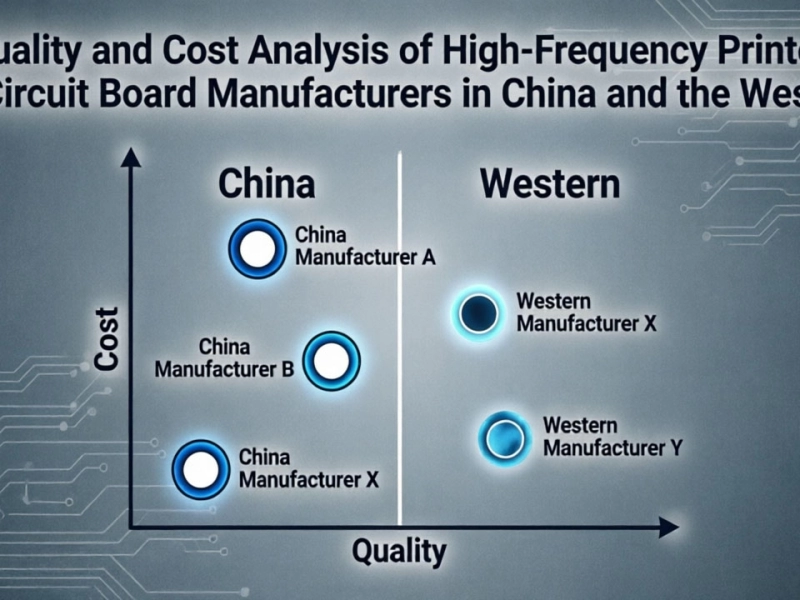
Quality and Cost Analysis of High-Frequency Printed Circuit Board Manufacturers in China and the WestJune/04/2026
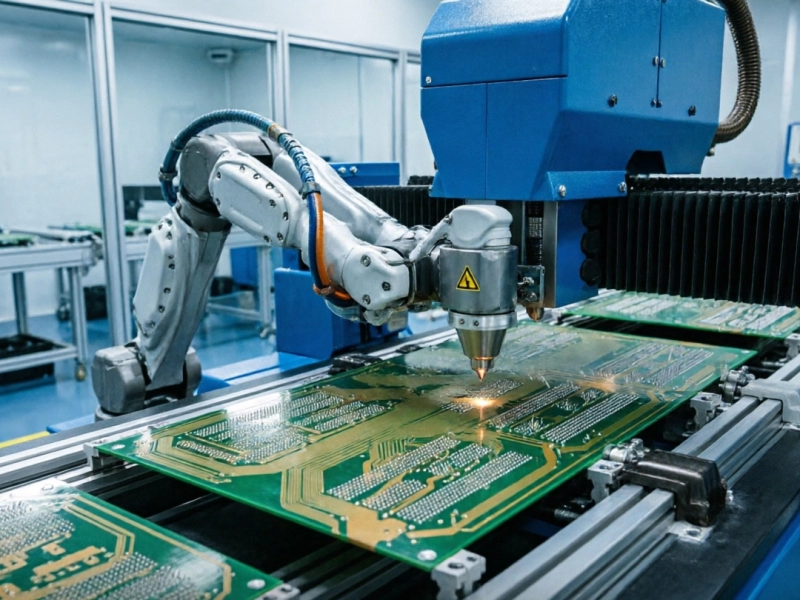
From Prototype to Mass Production: Scaling with a Reliable High Frequency PCB ManufacturerJuly/13/2026
Why Certifications Matter: IATF16949 and ISO Standards for Your High Frequency PCB ManufacturerJune/17/2026

Inside the Factory: What to Look for in a High Frequency PCB Manufacturer's FacilityAugust/03/2026