
The decision to engage a turnkey high frequency PCB assembly partner ranks among the most consequential choices engineering teams make during product development. The right partner accelerates timelines, reduces risk, and contributes expertise that elevates product quality. The wrong partner introduces delays, creates quality problems, and drains engineering resources into troubleshooting issues that should never have occurred. This guide provides a systematic framework for evaluating potential partners, ensuring that selection decisions reflect careful analysis rather than chance or superficial impressions.
high frequency PCB assembly presents challenges that differentiate it fundamentally from conventional electronics manufacturing. RF and microwave applications demand materials with precise electrical properties, fabrication processes that maintain tight tolerances, and Assembly Techniques that preserve Signal Integrity. The partners that excel at these requirements possess specialized capabilities, accumulated expertise, and quality systems calibrated for the demands that RF work imposes. Finding these partners requires evaluation approaches that go beyond standard supplier assessment frameworks.

Effective partner selection begins with clear understanding of your own requirements. Partners that excel in one application domain may struggle in others. Matching your needs against partner capabilities requires honest assessment of the technical challenges your projects present.
Begin by documenting the technical requirements that define your high frequency applications. Frequency range determines material selection and fabrication tolerance requirements—RF applications below 6GHz differ substantially from microwave designs approaching 30GHz or beyond. Power levels affect thermal management considerations and may drive material choices that differ from low-power designs. Impedance tolerance requirements establish the precision that fabrication and assembly must achieve.
Environmental requirements further refine technical specifications. Products destined for automotive, aerospace, or industrial applications face temperature extremes, vibration, and humidity exposure that consumer electronics avoid. Military and aerospace applications impose additional qualification requirements that general-purpose manufacturers cannot satisfy. Understanding your complete technical envelope enables meaningful capability assessment.
Production volume significantly influences appropriate partner selection. Prototype and low-volume production favor partners excelling at rapid turnaround and engineering flexibility. High-volume production demands partners with manufacturing capacity, process automation, and yield optimization expertise. Some partners excel across volume ranges; others specialize in specific production scales.
Timeline expectations affect partner selection through capacity availability and process efficiency. Aggressive development schedules require partners with rapid prototype capabilities and responsive engineering support. Extended production timelines allow partners with longer lead times but perhaps superior process maturity. Matching your timeline needs against partner capacity ensures that scheduling expectations are realistic.
Products with long expected lifetimes—industrial equipment, infrastructure electronics, automotive systems—require partners capable of supporting extended production spans. Component availability, material continuity, and process documentation practices all affect whether partners can support products over decades rather than years. Partners who focus exclusively on rapid-turn prototyping may lack the systems and commitments that long-lifecycle support demands.
Consider also your own organizational trajectory. Startup companies anticipating rapid growth need partners who can scale production alongside business growth. Enterprises with established volumes may prioritize efficiency and cost optimization over startup flexibility. Understanding your roadmap enables partner selection aligned with anticipated evolution rather than just current requirements.
Technical capability assessment forms the foundation of partner evaluation. Capabilities must match requirements precisely—not overkill that wastes cost, and not underkill that compromises quality.
Fabrication capabilities for high frequency PCBs extend beyond standard Pcb Manufacturing. Assess partner expertise in the specific material systems your applications require—ceramic-filled PTFE, hydrocarbon composites, or specialized RF laminates from specific manufacturers. Understand their experience with the tolerance requirements your designs impose—impedance tolerances of 5%, 7%, or 10% demand different fabrication precision.
Via formation capabilities affect what designs partners can support. Standard through-hole plating handles many RF applications, but advanced designs may require blind vias, buried vias, or controlled depth drilling. Assess whether partner via capabilities match your design complexity, and understand how via structures affect RF performance in your applications.
High frequency assembly presents challenges that standard Smt facilities may struggle to address. RF connector attachment, coaxial cable termination, and specialized component mounting all require expertise that general-purpose assemblers may lack. Assess partner experience with the specific assembly requirements your products impose.
Test capabilities deserve particular attention. Partners should possess network analyzers capable of characterizing your designs across the frequency ranges they must operate. Time-domain reflectometry, S-parameter measurement, and Insertion Loss characterization all support high frequency validation. Understanding partner test capabilities—and whether they extend beyond basic continuity testing—reveals whether meaningful RF validation is possible.
Established relationships with high-frequency laminate manufacturers differentiate capable partners from those with limited material access. These relationships enable material sourcing that general-purpose suppliers cannot match, including access to specialty materials, preferential allocation during shortages, and direct technical support from material manufacturers.
Assess partner relationships with multiple material suppliers rather than single-source dependencies. Supplier diversity provides flexibility when material availability or pricing shifts. Partners should demonstrate understanding of material characteristics that affect your applications—not just ability to procure specified materials, but expertise in how material properties translate to electrical performance.
Quality systems for high frequency assembly differ from standard electronics manufacturing in their emphasis on process control and documentation traceability.
High frequency quality depends on process consistency that exceeds conventional electronics requirements. Impedance-controlled fabrication demands tight control of trace width, dielectric thickness, and copper roughness—parameters that standard PCB inspection may not monitor. Assess whether partners measure and control the parameters that actually affect your electrical requirements, not just generic quality characteristics.
Statistical process control provides visibility into manufacturing consistency that inspection-based approaches cannot match. Partners who track process parameters and maintain control charts demonstrate systematic quality management that ad-hoc inspection misses. Understanding the process controls partners maintain—and how they use control data to drive continuous improvement—reveals quality system maturity.
Complete documentation enables failure analysis, regulatory compliance, and continuous improvement. Partners should maintain records linking finished assemblies to the specific material lots, process parameters, and inspection results that produced them. This traceability supports root cause investigation when problems occur and demonstrates quality system discipline.
For regulated industries—medical devices, aerospace, automotive—documentation requirements extend beyond general quality records to include specific compliance documentation. Partners serving these markets must understand the documentation requirements that apply and maintain quality systems calibrated for regulatory expectations.
Quality certifications provide baseline assurance of system capability. Iso 9001 certification indicates basic Quality Management System implementation. Industry-specific certifications—AS9100 for aerospace, ISO 13485 for medical devices, IATF 16949 for automotive—demonstrate capability calibrated for specific application requirements. Assess which certifications partners hold and whether they match your application domains.
Beyond certifications, evaluate partner compliance practices. How do they handle non-conforming materials? What corrective action processes do they follow when quality issues occur? How do they communicate quality concerns to customers? These practices reveal quality culture that formal certifications may not fully capture.
Turnkey partnership value extends beyond manufacturing to include engineering expertise that enhances product development. Assessing engineering support capabilities helps identify partners who contribute to design success rather than merely executing manufacturing tasks.
Partners with strong design for manufacturing capabilities provide consultation that improves producibility without compromising electrical requirements. RF-specific Dfm expertise identifies design patterns that create manufacturing challenges—trace geometries that cannot achieve tolerance targets, material selections that complicate processing, or layout decisions that risk assembly problems. This proactive consultation prevents problems before fabrication begins.
Assess the depth of Dfm consultation partners offer. Some provide cursory design reviews that catch obvious issues. Others deliver comprehensive analysis that addresses subtle producibility concerns. The quality of DFM consultation often predicts overall partnership quality.
Engineering support value depends heavily on communication quality. Partners who respond quickly to technical inquiries, communicate clearly about design constraints, and proactively flag concerns provide engineering value beyond their manufacturing capabilities. Assess communication responsiveness during initial engagement—the patterns established early often persist throughout partnerships.
Technical communication extends to documentation quality. Design rule documentation, material specifications, and process parameter descriptions should communicate clearly without ambiguity. Evaluate whether partner documentation meets your technical communication needs, not just whether documents exist.
When problems occur—and in complex Rf Manufacturing, they inevitably do—partner problem resolution capability directly affects project outcomes. Assess how partners approach failure investigation, whether they engage root cause analysis or simply replace defective units, and how they communicate findings to customers.
Partners should demonstrate systematic problem-solving approaches rather than reactive firefighting. Ask about recent difficult problems and how partners resolved them. The quality of these explanations reveals problem-solving maturity and customer communication practices.
Current capacity determines whether partners can accommodate your projects without excessive delays. More importantly, capacity scalability indicates whether partners can grow alongside your business. Assess both current loading and growth trajectory—partners at capacity may deliver today but constrain tomorrow's opportunities.
Capacity extends beyond manufacturing floor space to include engineering resources, test capabilities, and administrative support. Partners stretched across multiple priorities may deliver excellent quality but struggle with responsiveness or engineering consultation depth. Understanding total capacity picture—not just manufacturing slots—reveals realistic delivery expectations.
Geographic location affects logistics cost, communication convenience, and response time for urgent needs. Partners in distant locations may offer cost advantages but introduce communication friction and logistics complexity. Balance cost considerations against the practical benefits of proximity.
For high frequency assemblies where shipping affects temperature and humidity exposure, logistics considerations may influence partner selection directly. Assess whether partners understand and address the shipping vulnerabilities that High Frequency Materials exhibit.
Partner financial stability affects long-term relationship viability. Unstable partners risk production interruptions that cascade through your supply chain. Assessing financial health provides insurance against partnership disruptions that technical evaluation cannot address.
Beyond financial stability, evaluate partner business continuity practices. How do they handle equipment failures? What disaster recovery capabilities do they maintain? These practices protect against rare but catastrophic events that could disrupt your production.
Cost evaluation for high frequency assembly requires approaches that capture total cost of ownership rather than just quoted prices.
Quoted prices often underrepresent true partnership cost. Engineering consultation time, revision costs, expedited processing premiums, and failure-related expenses all contribute to total cost. Partners who quote aggressively may recover costs through engineering charges, revision fees, or quality-related expenses that make seemingly low prices uncompetitive.
Request comprehensive cost breakdowns that include all potential charges. Evaluate not just unit prices but engineering costs, tooling investments, test charges, and documentation fees. This comprehensive view enables accurate comparison across potential partners.
The lowest-cost partner rarely delivers the best outcome. Partners who contribute engineering expertise, communicate proactively about potential problems, and consistently deliver quality reduce total cost through avoided failures and accelerated timelines. Quantify these value contributions where possible—the best partnership may cost more per unit but deliver lower total cost through superior outcomes.
Consider also opportunity costs. Partnership delays, quality problems, and engineering frustrations consume resources that have value elsewhere. Partners who execute reliably free engineering resources for product development rather than manufacturing troubleshooting.
Claims of capability require verification through evidence. References and track record provide this verification that marketing materials cannot supply.
Request references from projects similar to yours in technical complexity, volume, and application domain. A partner with excellent track record in consumer RF may lack relevant experience for aerospace applications. References should demonstrate not just successful delivery but relevant technical depth.
When contacting references, ask about collaboration quality, problem resolution, and whether they'd choose the same partner again. These questions reveal relationship satisfaction that project success alone may not capture.
Beyond specific references, analyze partner track record across their customer base. How long have they served current customers? What patterns emerge in customer retention? Partners with long-standing customer relationships demonstrate consistency that newer providers may not have established.
Ask about failure rates and how they compare to industry benchmarks. Partners unwilling to share this information may have something to hide. Those who can demonstrate competitive quality metrics show transparency that supports confidence.
Partner selection should follow systematic process rather than relying on intuition or initial impressions alone.
Structure evaluation across multiple stages, beginning with capability screening that eliminates partners clearly unable to meet requirements. Intermediate evaluation should include technical discussions, documentation review, and preliminary pricing. Final selection should incorporate site visits, reference verification, and detailed commercial negotiation.
Document evaluation criteria and scoring before beginning assessment. This discipline ensures that selection reflects systematic analysis rather than pressure or impression. It also provides defensible rationale if decisions are questioned.
Consider structuring initial engagement as a limited pilot project before committing to major production. Pilot projects validate capabilities in actual execution, revealing strengths and weaknesses that evaluation discussions may not surface. The cost of pilot projects is justified by the risk mitigation they provide.
Pilot project scope should exercise the capabilities most critical to your success. If high-frequency expertise matters most, design pilots that test this specifically. If responsive communication is essential, pilots evaluate communication patterns. Design pilots to surface concerns before they affect significant production.
Selecting a turnkey high frequency pcb assembly partner requires systematic evaluation that extends beyond superficial capability assessment. Technical capabilities must match your specific requirements. Quality systems must demonstrate the control and documentation that RF applications demand. Engineering support must contribute to your success rather than merely enabling manufacturing execution. Operational factors must support reliable project delivery. Cost considerations must capture total ownership rather than just quoted prices.
The framework outlined in this guide—understanding your requirements, evaluating core capabilities, assessing quality systems, examining engineering support, reviewing operational factors, analyzing costs, and verifying track records—provides the systematic approach that effective partner selection requires. Following this framework rigorously improves the probability of successful partnership outcomes.
The right turnkey high frequency pcb assembly partner becomes a strategic asset that contributes to your competitive position. The selection decision merits the time and attention that systematic evaluation requires. Investing in thorough partner selection pays dividends throughout the duration of what should be long-term, mutually beneficial partnership.
Prioritize capabilities that match your specific application requirements. For most RF applications, material expertise with appropriate laminate systems, Controlled Impedance processes, and test capabilities for RF characterization are essential. Beyond these basics, assess via formation capabilities, layer count limitations, and assembly expertise for any specialized components your designs require.
Verification requires evidence beyond marketing claims. Request specific examples of similar work, with permission to contact engineering contacts. Ask detailed questions about process capabilities—how they control impedance, how they verify dielectric properties, what test equipment they use. Visit facilities to observe processes directly. Verify through pilot projects that claimed capabilities translate to actual execution.
Iso 9001 provides baseline quality system assurance. Industry-specific certifications demonstrate deeper capability: AS9100 for aerospace, ISO 13485 for medical, IATF 16949 for automotive. For high frequency work, beyond certifications, assess specific process controls for the parameters that affect your RF performance—impedance tolerance, dielectric consistency, trace geometry control.
Geographic proximity matters primarily through its effects on communication, logistics, and response capability. Nearshore partners offer easier communication and faster response for urgent issues. Remote partners may offer cost advantages or specialized capabilities that justify distance. Evaluate based on practical factors rather than arbitrary distance preferences.
Ask about their design for manufacturing process, including when in the design cycle they become involved. Inquire about typical response times for technical questions. Ask how they handle design issues they identify during review. Discuss problem resolution approaches and how they communicate findings. These questions reveal engineering engagement quality that affects project outcomes.
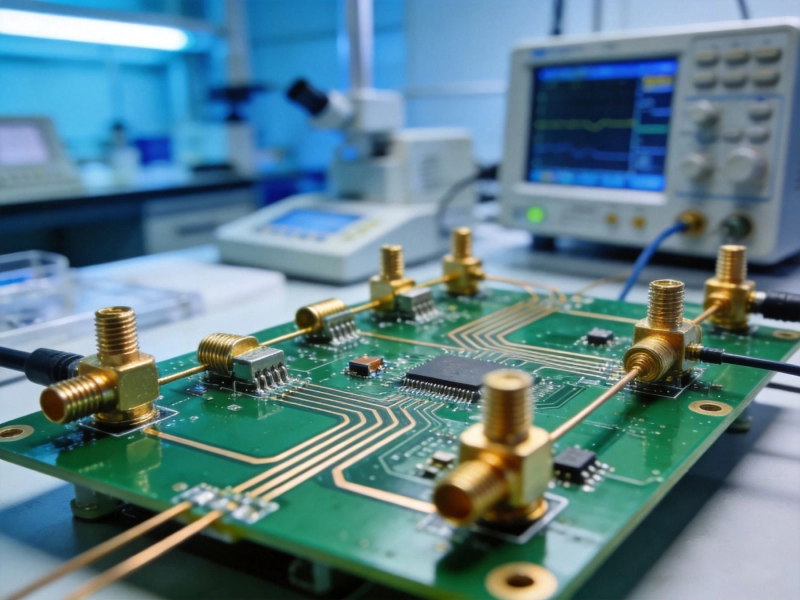
High Frequency PCB Assembly Best Practices for 5G and RF ModulesJune/08/2026

Ensuring Signal Integrity During High Frequency PCB Assembly ProcessesJuly/15/2026

Why Component Placement is Critical in High Frequency PCB AssemblyJune/25/2026
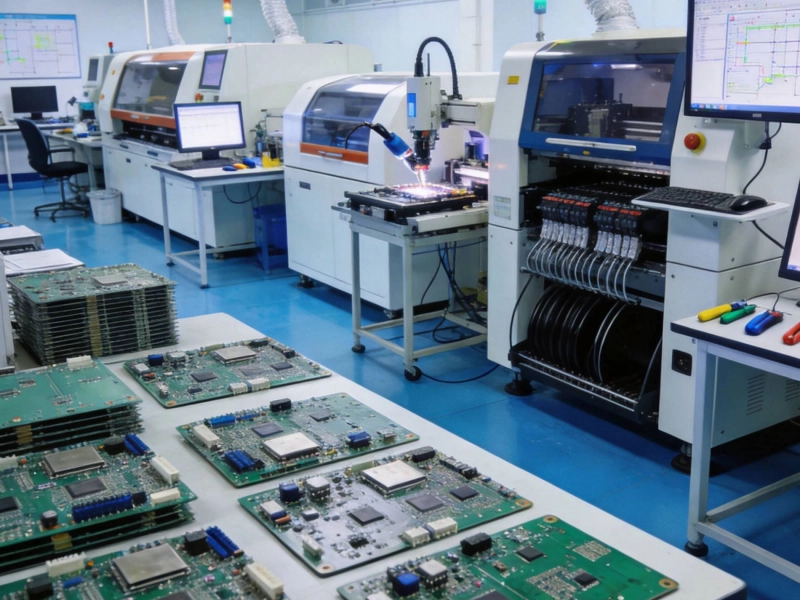
The Challenges of High Frequency PCB Assembly: Handling Sensitive ComponentsMay/29/2026

Avoiding Soldering Defects in High Frequency PCB Assembly for RF ApplicationsSeptember/11/2026
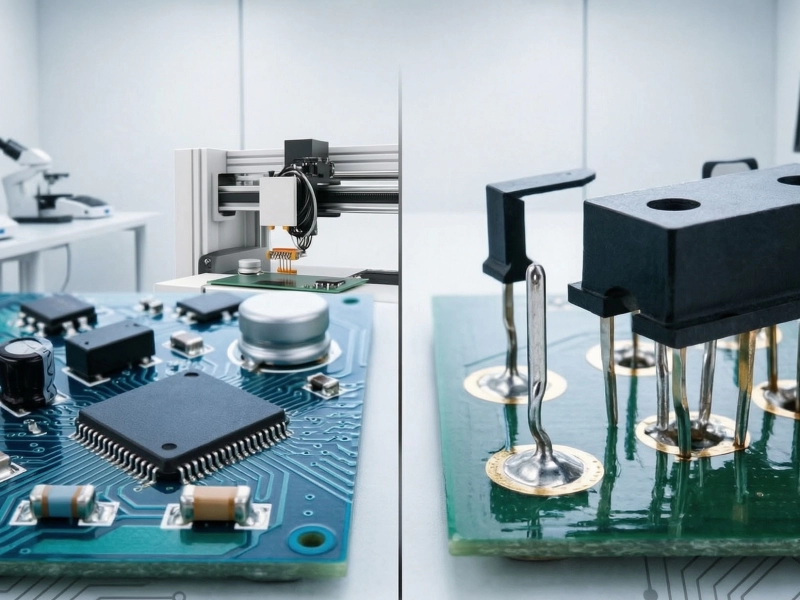
SMT vs. THT: Assembly Techniques for High Frequency PCBsJuly/03/2026

Demystifying Impedance Control: Core High Frequency PCB KnowledgeJuly/09/2026
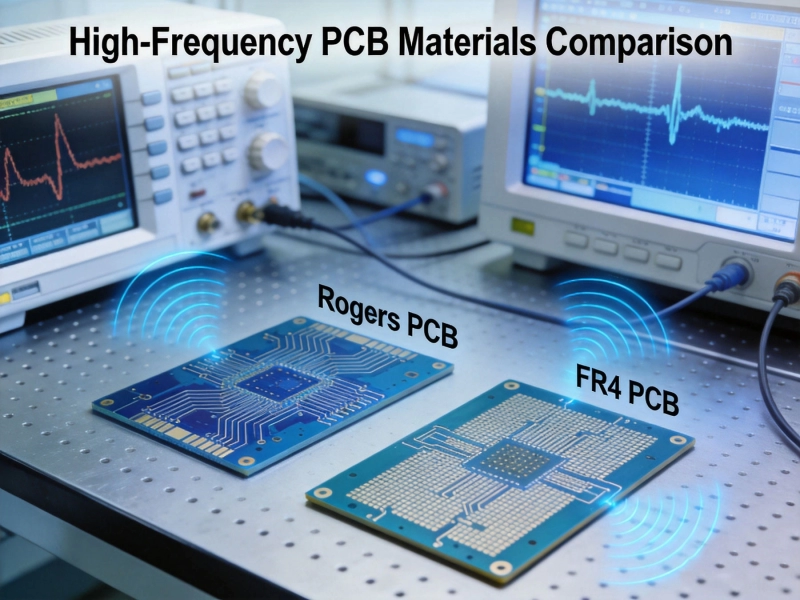
Rogers vs. FR4: Choosing the Right High Frequency PCB MaterialsJune/12/2026